
Why You Should Cook for Christmas
Ray Varghese Madathil
Christmas dinner invokes images of frosted windowpanes, steaming mugs of rich hot chocolate, and a giant, glistening ham as the centerpiece. For some, at least. For most, Christmas dinner consists of takeout containers, as more than half of American consumers plan to dine out or order takeout for Christmas gatherings, according to the National Restaurant Association.
Despite these slightly disappointing statistics, to me Christmas is the special day amongst special days—the Michael Jordan of holidays. And much of my cherished family memories of Christmas center around the dining table. Spending my first Christmas away from home this year got me thinking about the significance of Christmas meals in different households.
Starting with Christmas’ traditional roots: the aforementioned Christmas ham, popular in America and Scandinavia, has its origins in pre-refrigeration times, when pork was preserved in the fall and would be ready to eat by Christmastime. In Germany and other parts of Central Europe, the traditional Christmas meal typically substitutes roast goose for ham, stuffed with apples, onions, and herbs to balance the richness of the fatty meat, and served with sides including potato dumplings, roasted chestnuts, braised red cabbage, and apple sauce. In Mexico, tamales are a Christmas staple, with their preparation a key Christmas tradition in itself, known, appropriately, as tamalada. During a tamalada, family and friends come together and form a multi-stage assembly line. Different parts of the process include spreading masa (ground nixtamalized corn) on corn husks, adding fillings, folding and steaming the tamales, with music and conversation an essential accompaniment.
But holiday meals can be just as rich among cultures in which Christmas is not traditionally celebrated. As people leave their home countries in search of a better life, they bring their food with them. Immigration is undoubtedly one of the greatest sources of culinary innovation (look no further than Peranakan cuisine, the pride and joy of Singapore, which blends Chinese, Indian, and Malay cuisines). As communities look to recreate familiar dishes with new ingredients, new flavours and preferences emerge until they essentially form a dish unto themselves. Out of this wonderful innovation has emerged some delectable yet nontraditional Christmas spreads, incorporating parts of celebratory feasts from back home as well as dishes from other cultures. For instance, Filipino immigrants in the United States pair pancit (an umbrella term for various kinds of Filipino noodle dishes, often served with calamansi as an acidic condiment) and classic Western sides such as mashed potatoes or stuffing with roast turkey, ham, or the much-loved lechon, which is roast suckling pig. A Caribbean Christmas dinner may include turkey, traditionally prepared or jerk-seasoned, along with macaroni and cheese, cassava, breadfruit, plantains, or saltfish fritters as a snack before the main event.
As a Malayali Syrian Christian, Christmas has always been an important occasion for my family. It is typically an elaborate affair, with gatherings held turn-by-turn at various relatives' houses. These gatherings inevitably revolve around a meal; breakfast is appam, a sort of rice pancake made with a fermented batter, served with rich, coconut-milk-enriched stew; lunch is the much-loved biryani. Not to mention the desserts: sweet payasam (which features prominently in a famous Indian fable), ice-cream, and the classic rum-soaked Christmas cake.
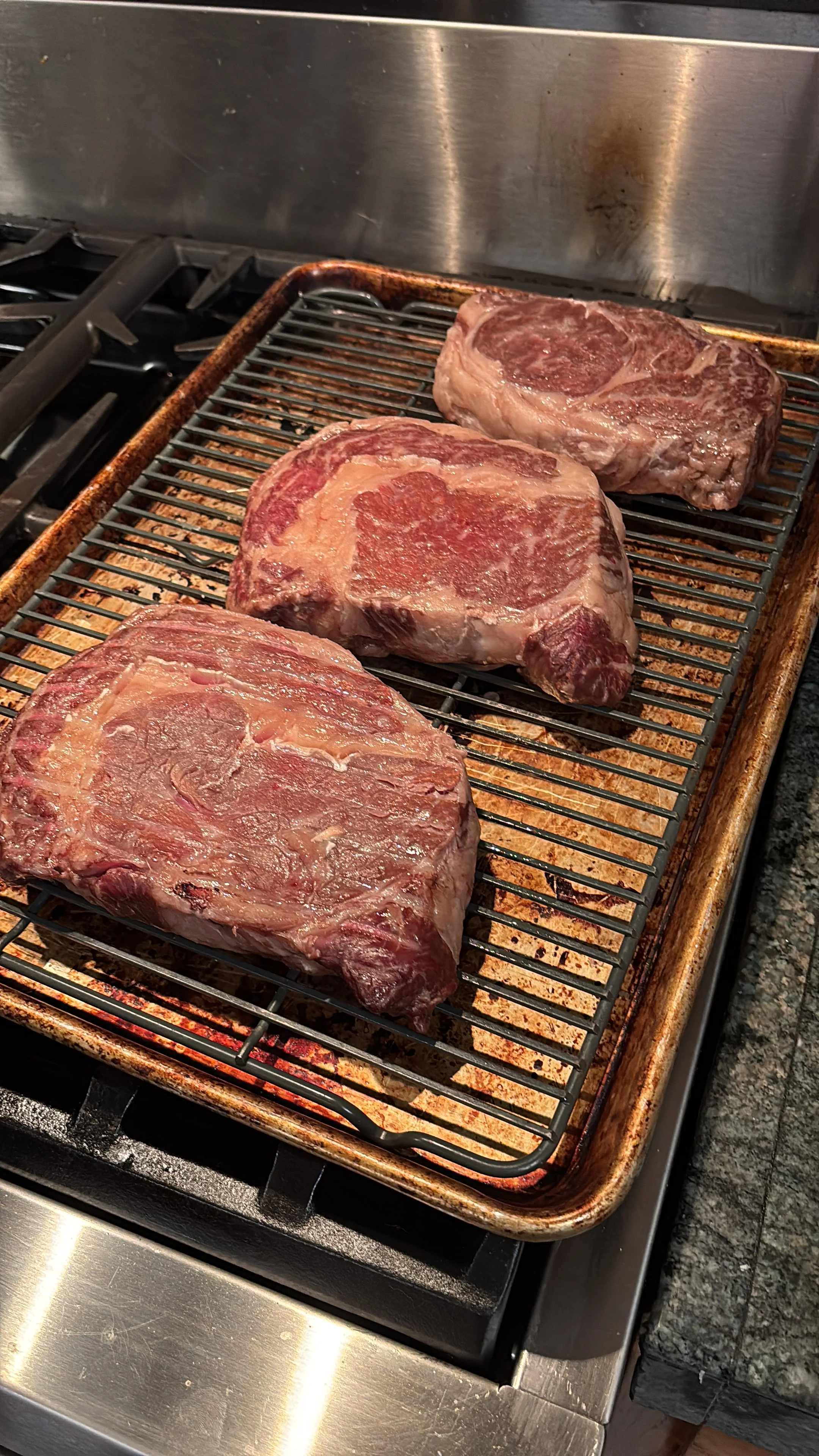
This Christmas’ ribeye steak
This finally brings me to the point of this piece: to urge you to cook for Christmas. Not only does cooking alongside friends and family serve as a bonding experience and Christmas activity in itself, but it is an integral way of preserving one’s culture despite being oceans away from home. Putting in the effort to learn how to prepare dishes from your own culture, even if you end up pairing them with your favorite international cuisines, is deeply rewarding, creating a dinner table that serves as a unique reflection of your own heritage and experiences. While the task may seem daunting and high-pressure, Christmas dinner does not need to be an elaborate spread; cook what you and your loved ones enjoy, and you likely won’t regret it (Case in point: the cracked cornbread - while imperfect, my family still assured me they enjoyed it).
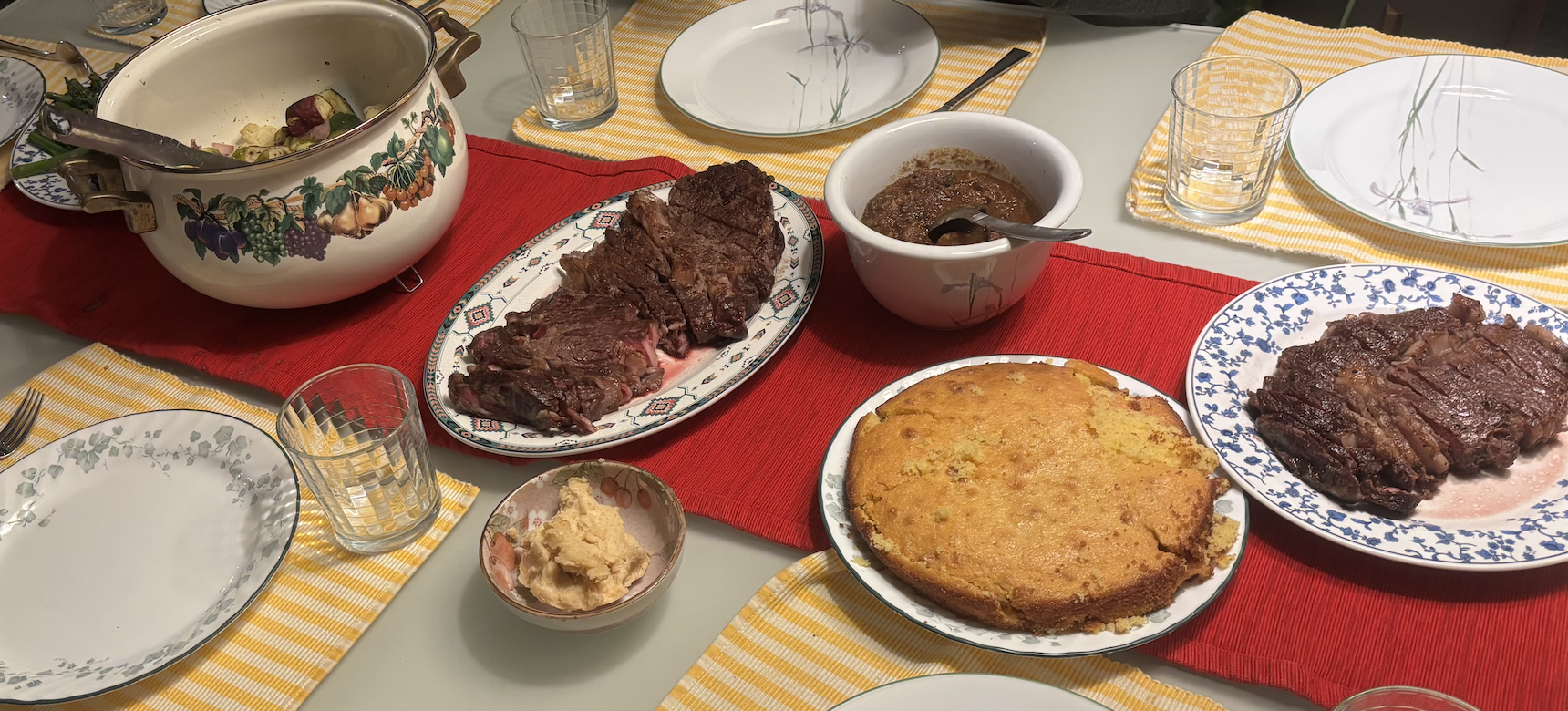
My own immigrant Christmas meal: Ribeye steak, goat curry and paratha (not pictured), cornbread with whipped honey butter, roasted mixed vegetables.