
A Week in My Kitchen: Featuring Isaac Wiener
Aubrey Barb
This entry is the second in a series exploring different cooking styles used by off-campus UChicago students.
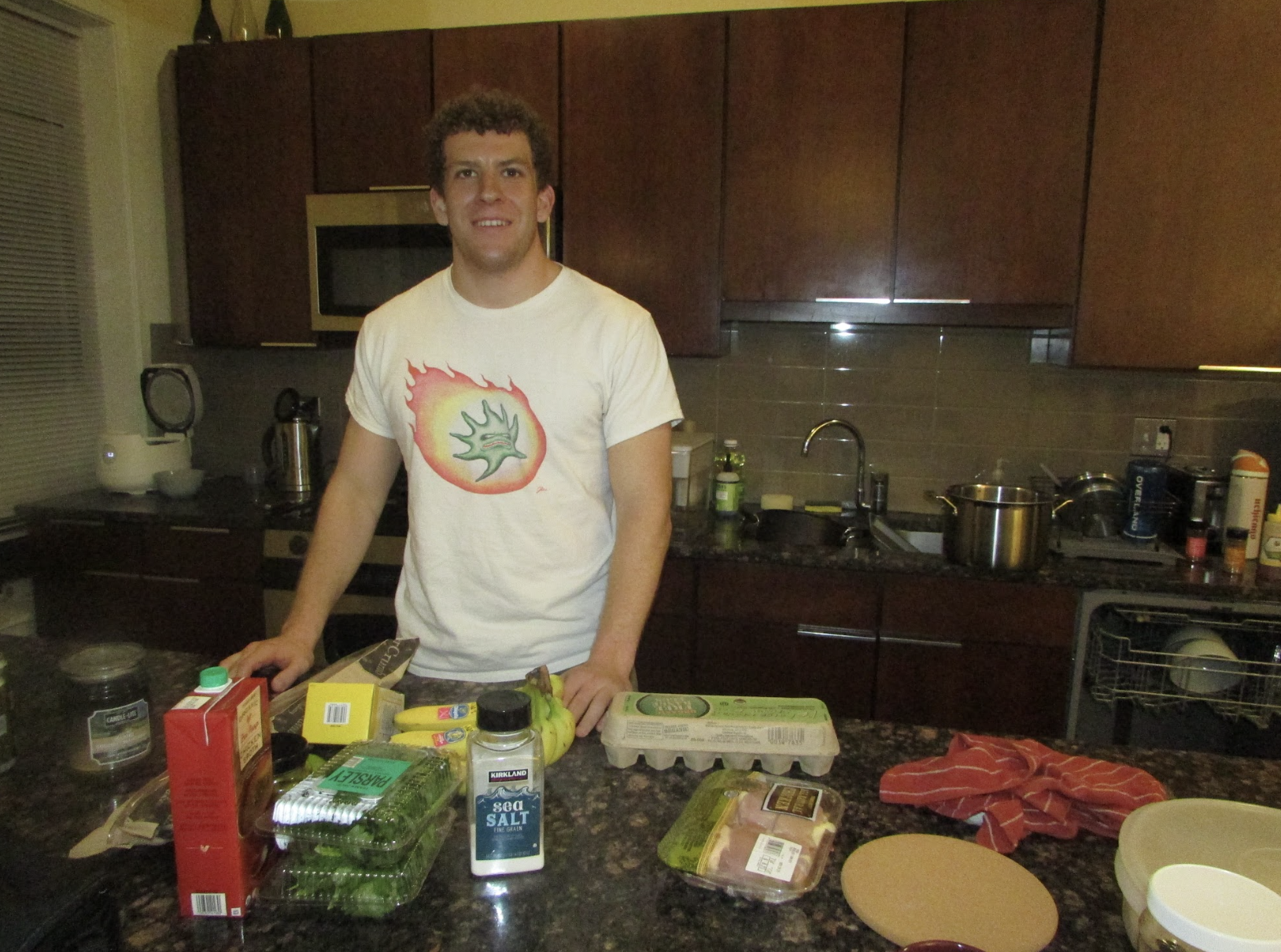
Wiener on a Sunday night, prepared to make his well-loved Chicken Tajine recipe.
Sunday: Food is _____?
For Isaac Wiener, a third-year student majoring in data science and economics (spec. data science), food was something he took for granted before coming to college. Although he has many fond memories of returning from school or practice to find his dad cooking, he remarks that he wasn’t able to truly appreciate it before moving away from home.
Now, Wiener says, food “really means a lot to me.” It’s a lot of work, but work that serves as a meaningful personal exercise. After a couple hours of thoughtful labor in the kitchen, Wiener describes the satisfaction of being able to produce something tangible for himself. (A true deliverable—for problem sets, job applications, and internship tasks, the same can’t always be said.)
Food is also a source of strength, both physical and social. He structures his meals around “protein,” as do many people of his generation, supporting regular gym workouts and the physical demands of traipsing around Hyde Park all day. But he also views cooking as a way to give back, and show love and appreciation for his friends. “I love to have people over,” Wiener says, describing the value of the time-honored sports-and-dinner combination. He’ll frequently invite a friend over to cook for them, and bond over a meal while watching whatever game happens to be on.
Living on his own, Wiener’s now able to appreciate the act of cooking for himself, and the structure it can give to mind, body, and life. He’s also been able to look back on his childhood with new respect and affection, fully understanding the care and work that went into his father’s daily cooking, which was, for so long, “just a part of life.”
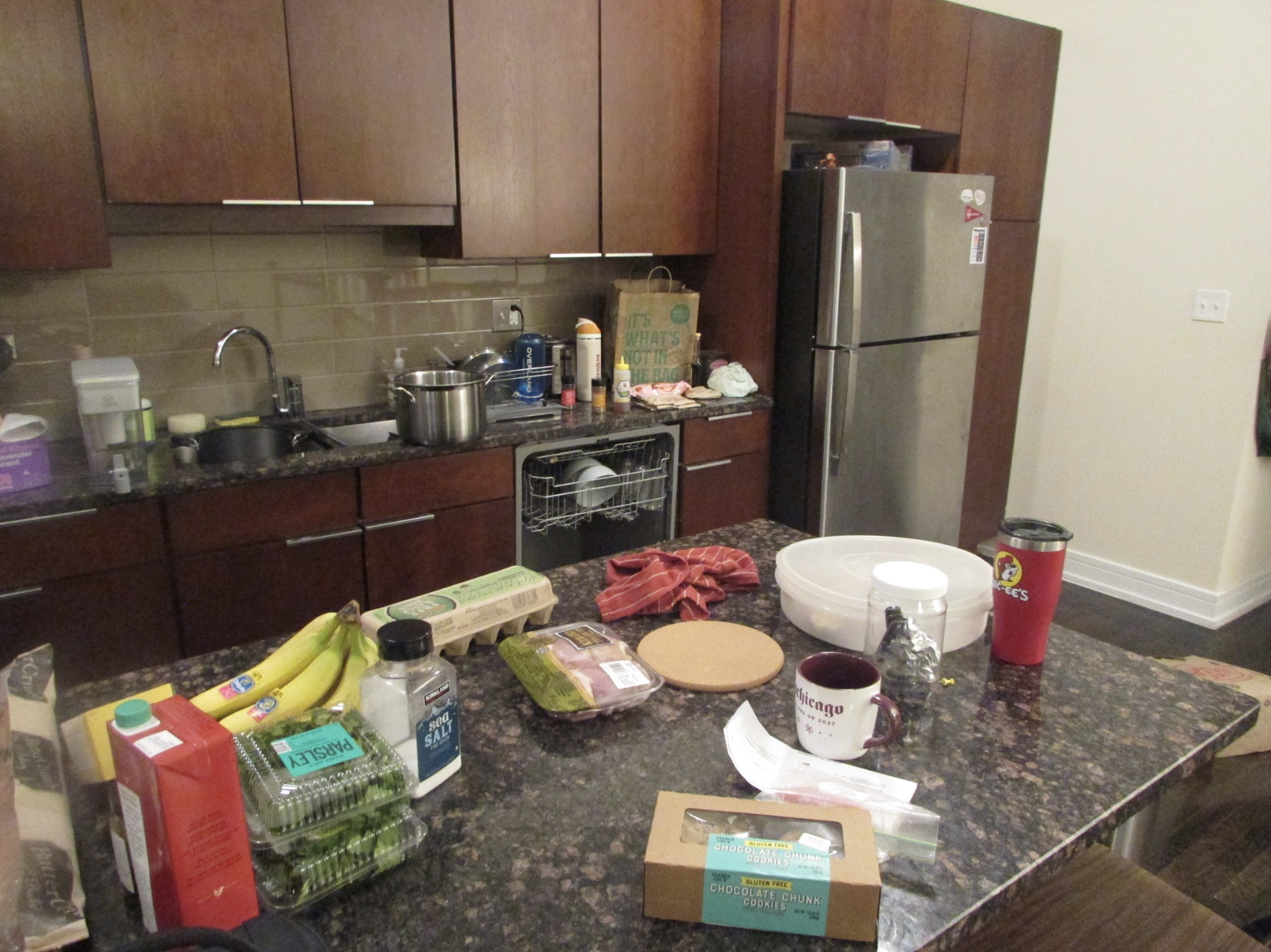
Wiener’s kitchen on an average evening.
Monday: Genealogy of a Kitchen
Despite many evenings spent hanging around the kitchen watching his father cook, Wiener rarely recalls the two ever cooking together. His father instead encouraged him to cook a little bit for himself and learn some basic kitchen skills—to this day, Wiener mostly prefers to cook independently. He’s spent his third year on a personal kitchen education journey, as he describes having “a lot of the theory, but none of the practice” until now.
Through trial, error, and countless new recipes, Wiener has discovered that he actually loves cooking for himself. For one, it presents a new behavioral option to “unwind while still being productive.” He describes being pretty slow at cooking, and often listening to music that makes him feel “old-fashioned, like my parents.” He remembers how his father would cook with 70’s or 80’s folk rock and so-called “saddled man music,” featuring artists like Jackson Browne. All of this contributes to a very meditative kitchen experience, where Wiener can focus on the physical experience of cooking and being fully present.
This kind of experience wasn’t possible before moving off-campus, as Wiener recalls cooking experiences marred by incredibly poor dorm kitchen ventilation. Since leaving the dorms and dining halls, he hasn’t often looked back, beyond occasionally reminiscing about the “complete ease and abundance of protein options” offered in the campus dining halls. (This I cannot deny–I once saw a student’s dinner plate piled high with six plain hamburger patties.)
In fact, most of the changes Wiener’s observed since moving off campus have been positive, from seeing his friends more regularly to experiencing a sort of kitchen self-actualization.
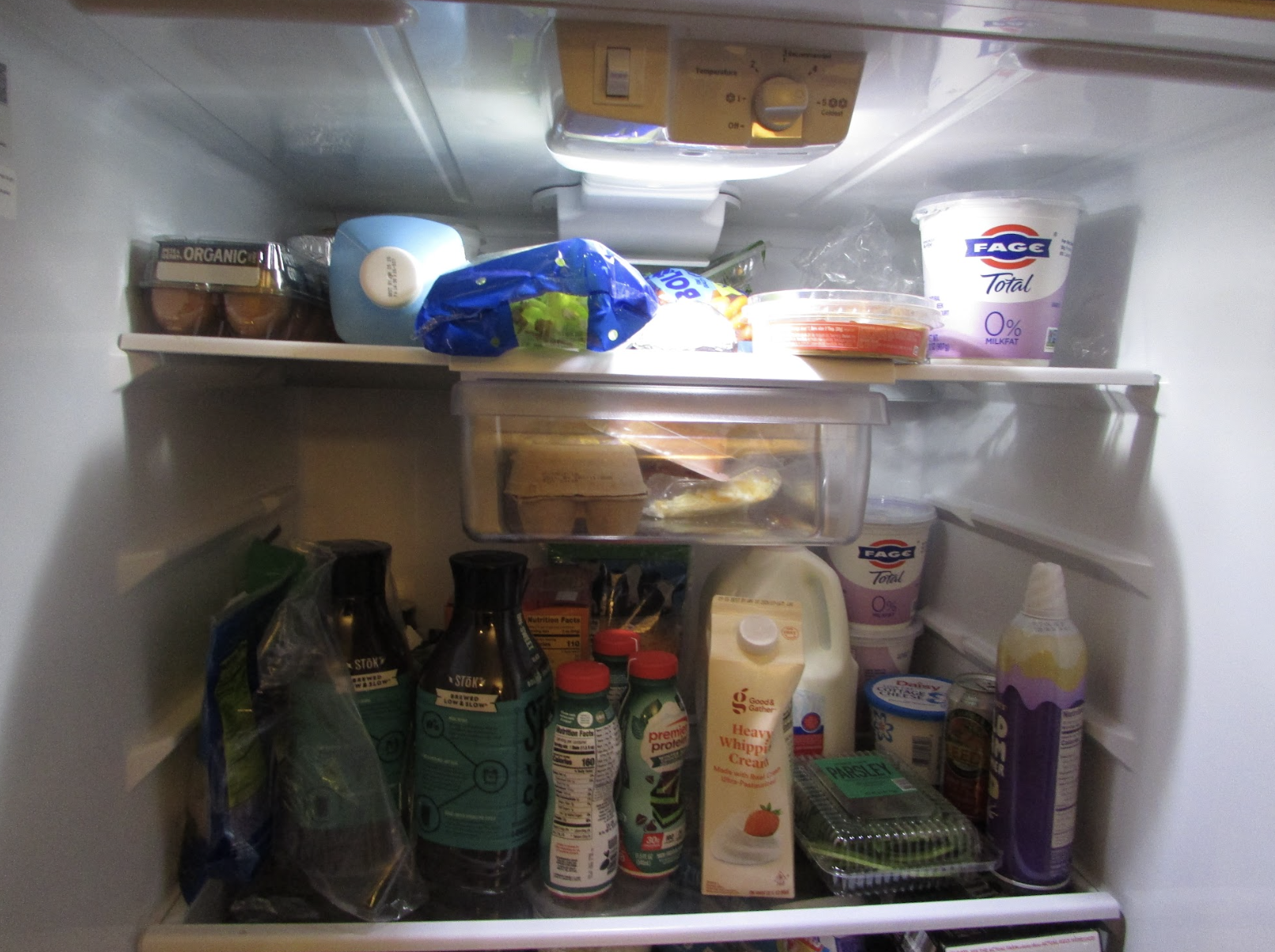
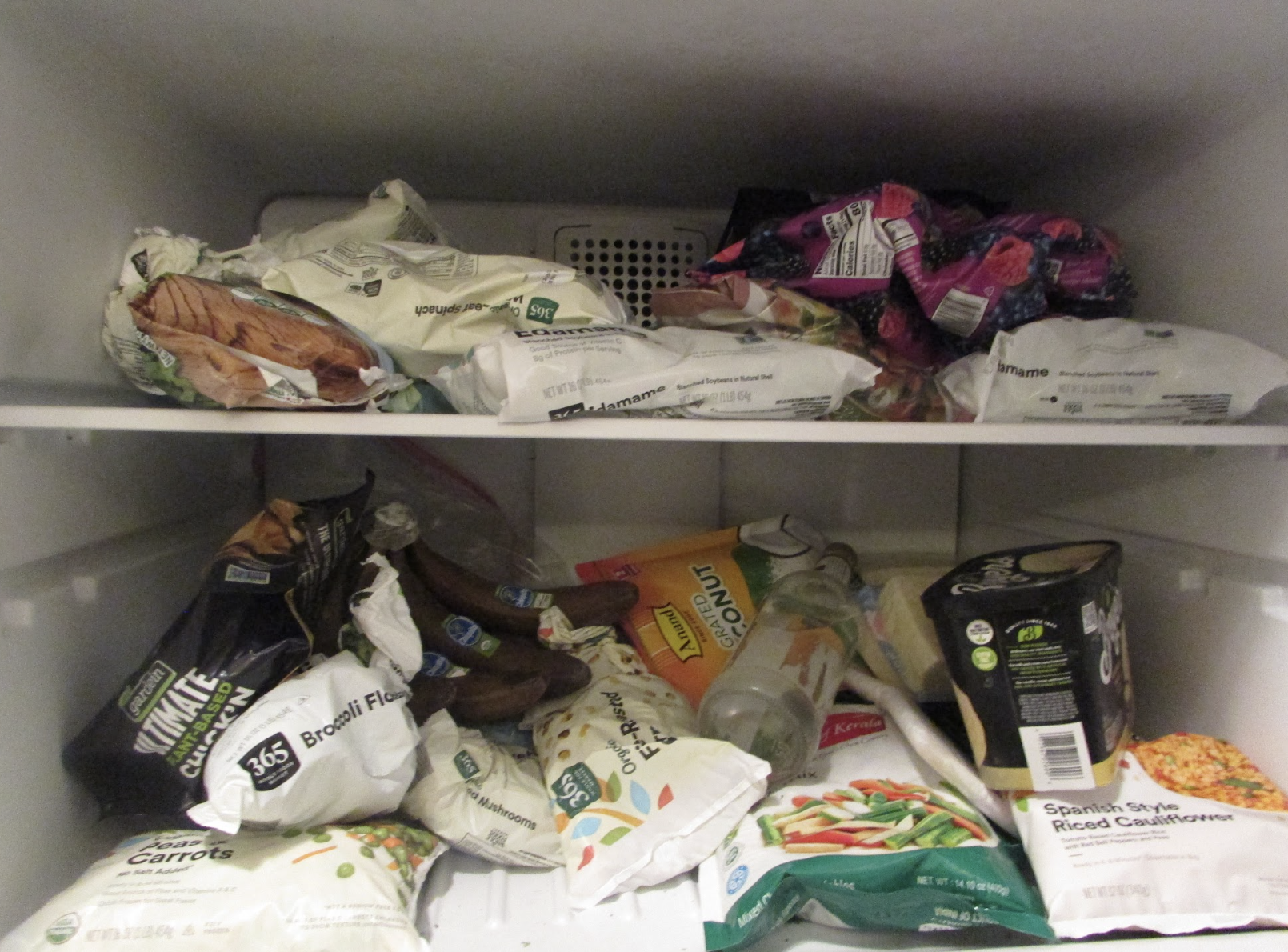
Shots of Wiener’s fridge and freezer–the yogurt belongs to his roommates.
Tuesday: Grocery Breakdown
Wiener usually starts the week by browsing recipes on the New York Times cooking section. He tries to cook three dinners a week, including one new, “out-there” recipe. After creating a plan (or “concepts of a plan”) for the week’s meals, he departs on a weekly Monday night pilgrimage to Trader Joe’s. His grocery list might look something like this:
2 Baguettes, 1 bunch of bananas, 1 container of grapes, 1 carton of eggs (as needed)
“Mid-tiered” meat (somewhere between bougie and cheap), most often salmon and chicken
Potentially a snack (ex. Trader Joe’s Mexican Street-style Corn Chips)
Remaining ingredients as needed for weekly recipes
Wiener’s grocery “no’s” are Hyde Park Produce (absurd prices), yogurt (good in theory, disappointing in practice), and desserts (he cites a terrible sweet tooth). He doesn’t buy with any particular food philosophy besides “what looks good,” and regarding organic produce, says he’s never noticed a huge difference in quality. Besides, he says, “everything has pesticides.”
Although Wiener doesn’t specifically budget for groceries, his total usually comes out to around $100 per week.
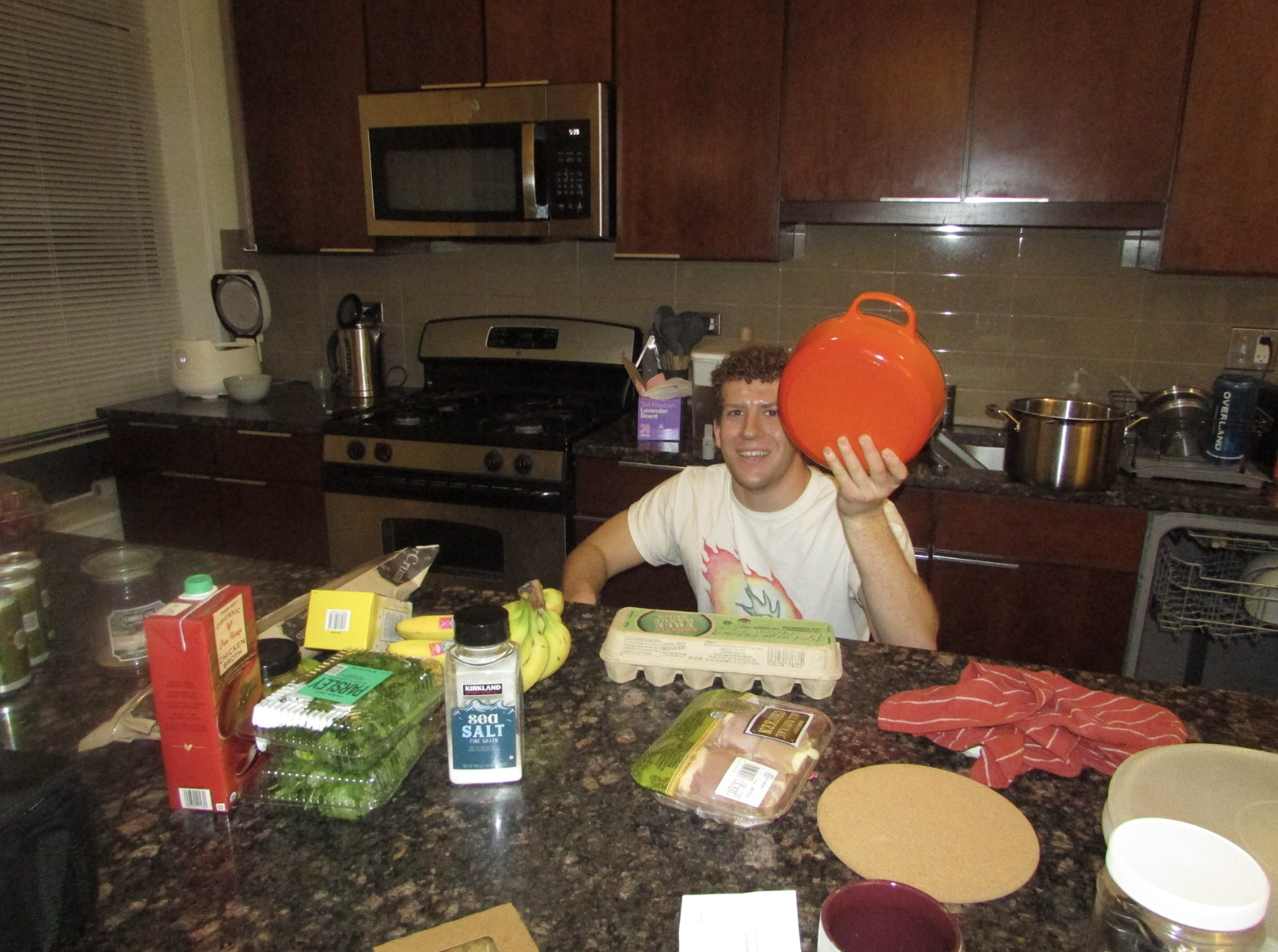
Wiener with his trusty (orange) Dutch oven.
Wednesday: Kitchen Tips and Tricks
The biggest home-cooking discovery, for Wiener, has been sheet pans. Many recipes are adaptable to roasting all the ingredients together on one or two sheet pans, which makes for fewer dirty dishes. An example he gives is the classic oven-roasted sausage, potato, and broccoli sheet pan—like this one from Mary’s Whole Life—which involves chopping, seasoning, and baking the sausage, potato, and broccoli together for a simple, balanced meal. On the sheet-pan front, I also feel obliged to call out Eric Kim’s easy recipe for sheet pan bibimbap.
Wiener’s other key recommendation is to use a towel when transferring frying pans between the oven, counter, and stovetop. For a while, he’d been handling them with…well, his hands, which was needlessly painful. He also says that every young cook needs a good all-purpose pot, shouting out his own orange Le Creuset Dutch oven. According to Wiener, it’s a pot that “feels elevated,” but is also durable and produces great results across the board for soups, stir-frys, and pan-roasted meals.
Thursday: Recipe Pass-downs
Besides the sheet-pan sausage recipe (see Wednesday), Wiener generally recommends the New York Times cooking section. He describes it as a great place to find new recipes for cuisines he’d normally never try, as well as easy staples he now makes on the regular. Wiener particularly loves their Chicken Tagine recipe—easy, delicious, and perfectly suited for his orange Dutch oven.
As far as baking, Wiener says he rarely makes sweets—while cooking feels like “part of life,” baking feels like “something separate.” It’s true that, in the pleasureless grind between weeks three and ten, UChicago’s student cooks can be hard-pressed to find the time for anything as whimsical as baking a sweet treat.
Friday: Eating Out
Wiener, who typically goes out for dinner once or twice a week, singles out Cedar’s and The Nile (especially the steak-in-a-sack and falafel wrap) as his favorite Hyde Park restaurants. Both are known for their generous portions.
The question of the best meal he’s ever eaten serves as more of a thought exercise than a source of recommendation for fellow UChicago-ans. Wiener recalls an unnamed Armenian restaurant with a delicious brisket sandwich that he and friends discovered on a backpacking trip in California. He also generally expresses his affection for sushi in LA, which is “as good as it gets.”
Saturday: Parting Words
Wiener describes his cooking style as approachable and sustainable for the “average person” (if they exist). Food does take up a lot of space in his life, from recipe browsing to grocery shopping to meal prepping. And the cleaning—he doesn’t love dishes. Still, it’s something he’s been able to naturally incorporate into his schedule, because what is cooking if not a natural part of life?
For Wiener, cooking is peace and friendship. And grams of protein. It’s a skill and practice to be nurtured, not at the expense of the grind but to its benefit.
Cue: “The Pretender” by Jackson Browne.