
The Edible Gold - White Truffle Menu at Piazza Duomo Alba
Polly Wang
I spent two nights in November 2025 at Alba, a little town located just an hour south of Torino, Italy. As the center of white truffles, Alba is having the busiest time of the year, the annual Truffle festival. It is also one of the most important cities in the Piemonte region of Italy, renowned for its wine—especially Barolo—and for Nutella, with Ferrero's production facilities just a step away from the city center.
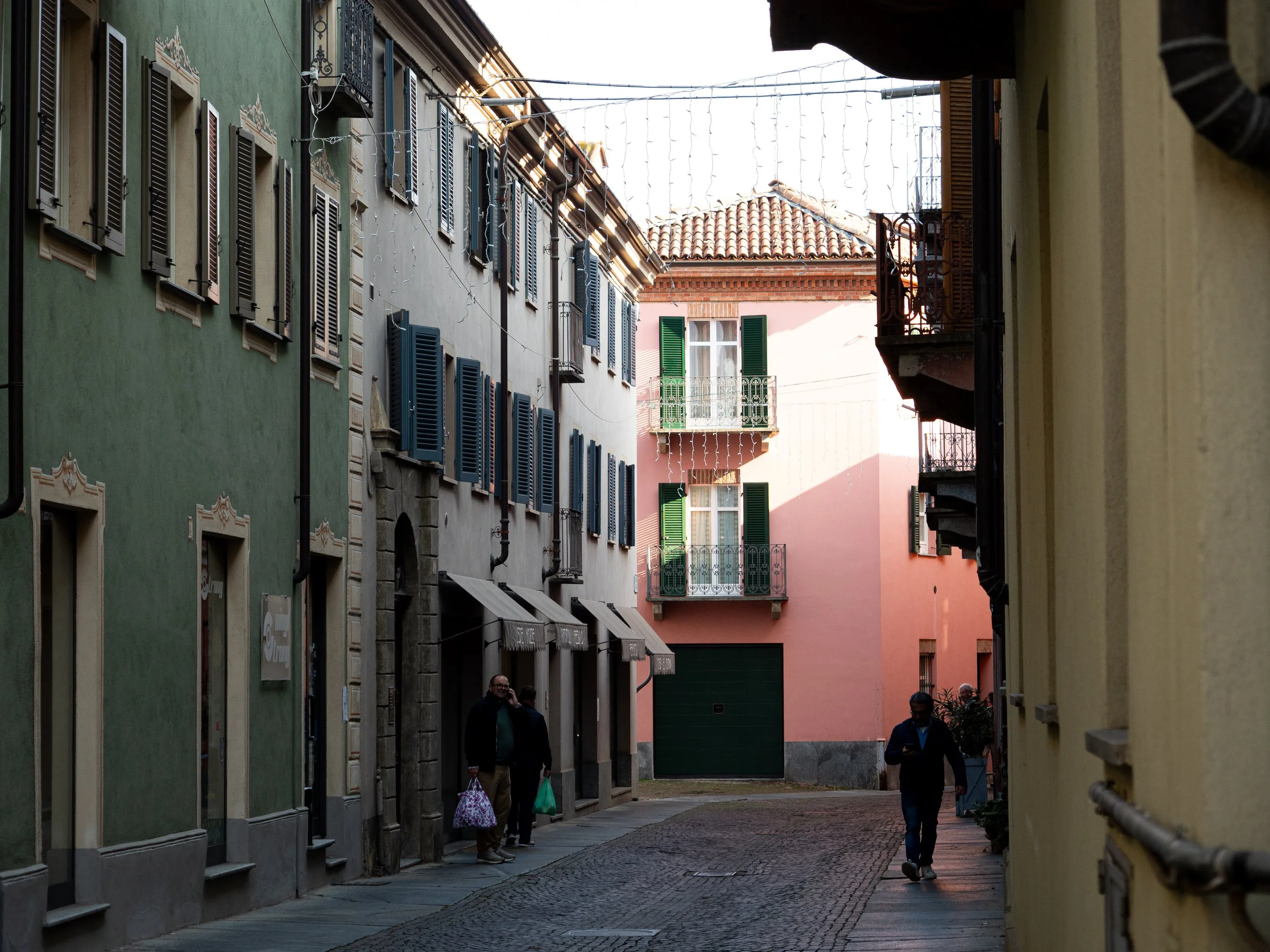
Town of Alba
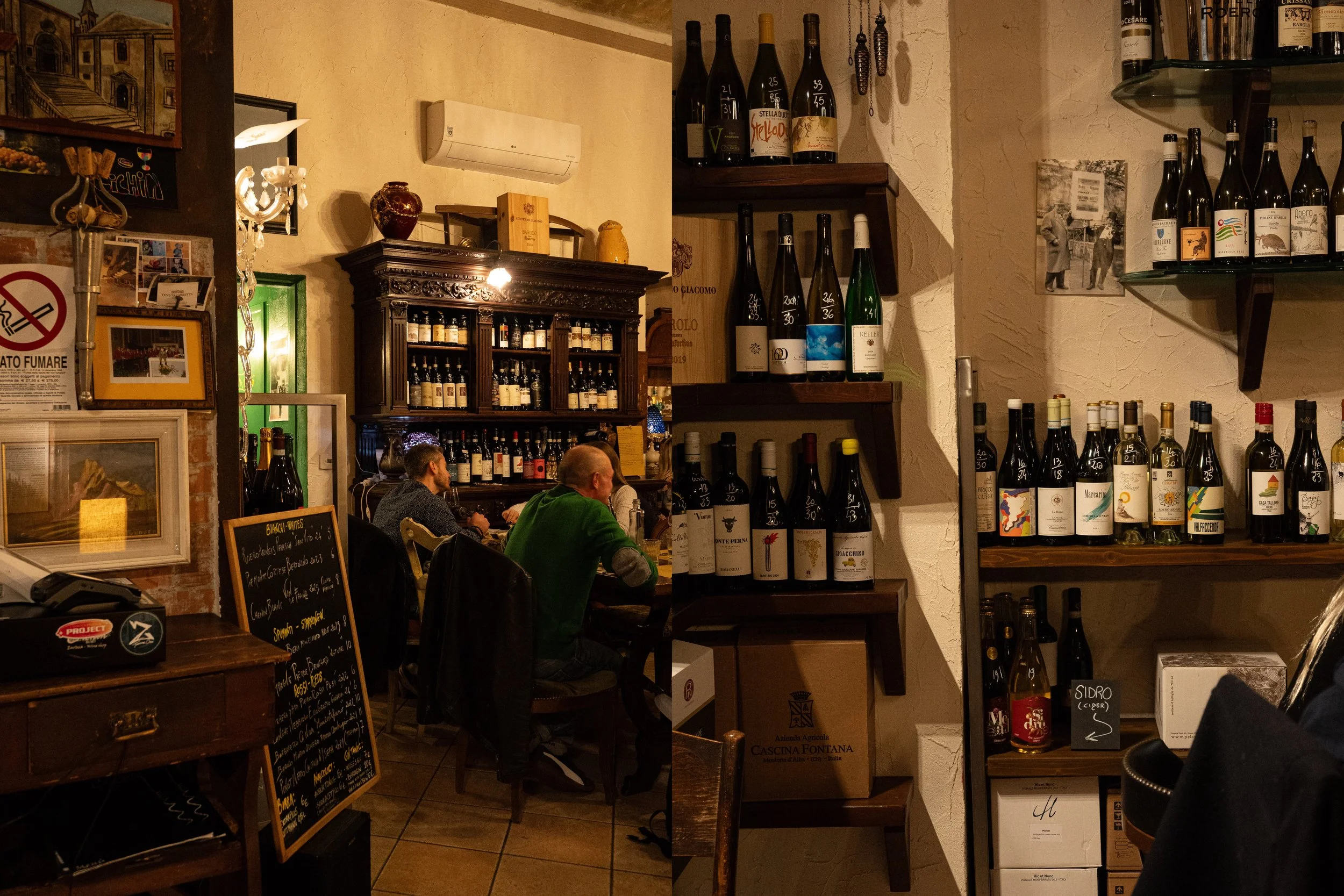
Local Wine Bar: Enoteca Vineria Cichin Vin e Crije Alba
I managed to secure a reservation at Piazza Duomo Alba, the Michelin three-star restaurant led by Enrico Crippa, famously difficult to book, especially during the white truffle season. As a pseudo-foodie, I decided to take a little trek to this culinary town.
I have always had mixed feelings toward the “Truffle, Caviar, Foie Gras” trio that many restaurants blindly use to appear fancy. White truffle, however, is often defended by devoted food enthusiasts: it cannot be farmed, only foraged, and exists within an extremely short natural season. Its scarcity, at least in theory, is inherent rather than constructed.
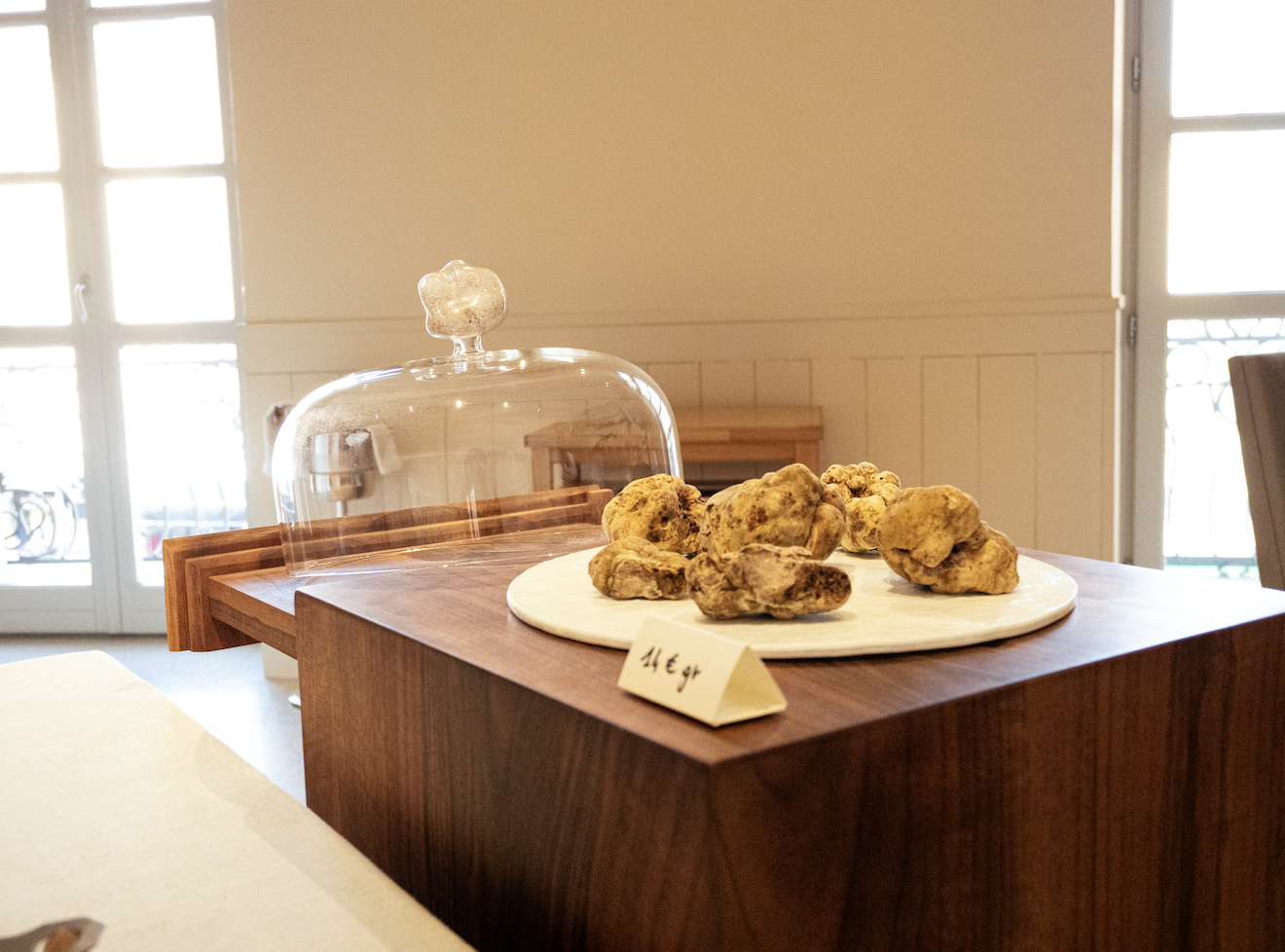
White Truffle Selection of the day, daily price €14/g
Still, before assigning its meaning, it is worth starting from the ingredient itself.
The aroma is divine, a mix of earthy, parmesan, musky, and garlic. When coming fresh, it hits your entire sensory system with a concentrated, powerful punch. The scent fleets, making you want to sniff it one more time, almost like some sort of addiction. From the palette, though, it is barely noticeable. The waiters had to slice the truffle as thin as a feather. The thinness maximizes its scent, and, most importantly, it minimizes its rough, paper-like texture in the mouth. It is in the aftertaste, rising from the back of the throat, that the fragrance returns.
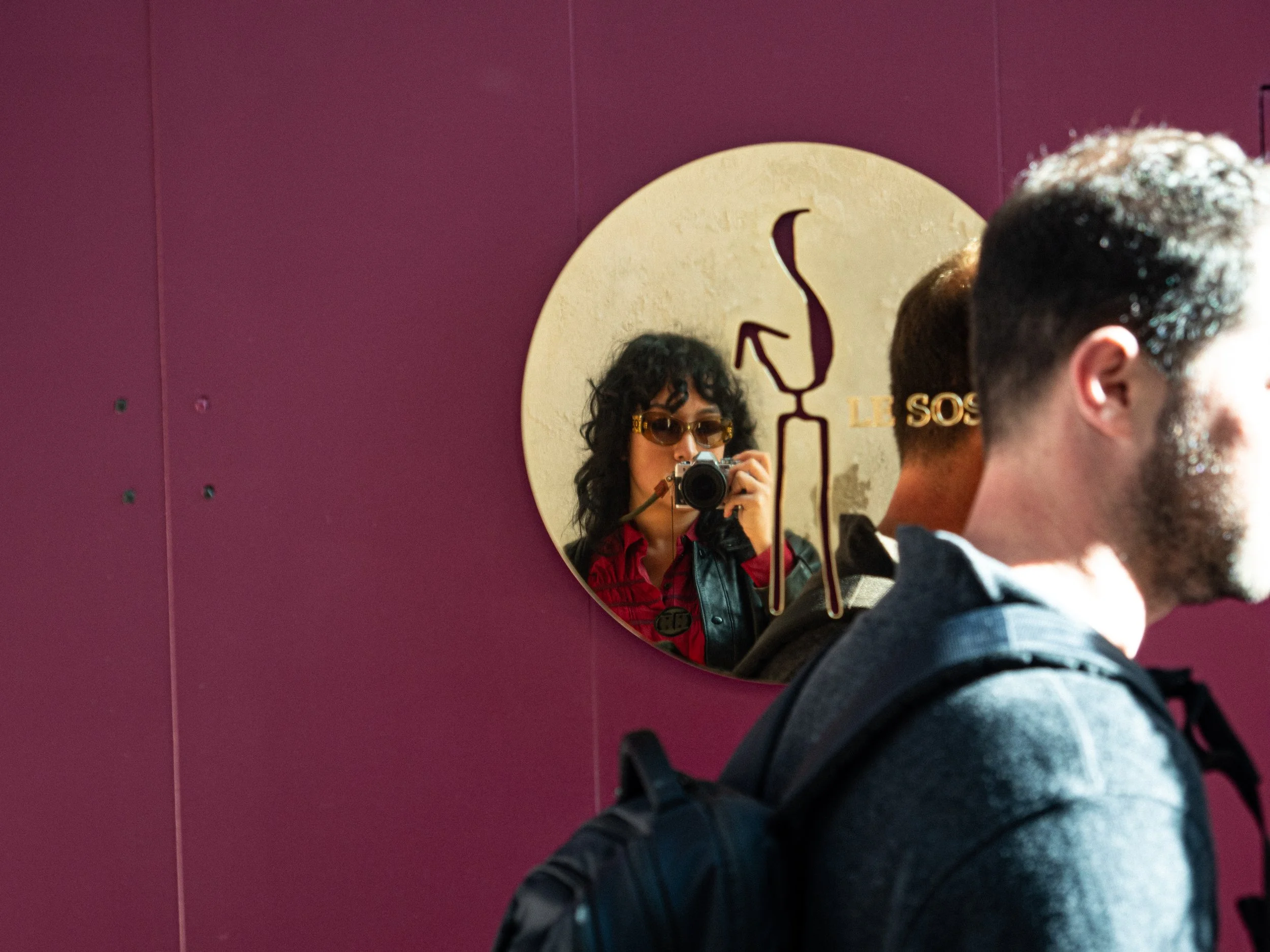
Restaurant Outlook
Piazza Duomo is situated in a quiet alley just off the main plaza. Its violet-pink outlook stands out against the surrounding beige, signaling something modern and unconventional. The main dining room—the Pink Room—sits on the second floor, designed around a pink wall with a fresco by Italian contemporary artist Francesco Clemente.
Yet, what struck me the most at Piazza Duomo Alba was not its pink walls, but the smell of white truffle I found myself bathing in. Although the restaurant also offers a regular menu and a menu designed around Barolo pairings, most guests were clearly there for the truffle, including the Swiss family seated next to me, who were about to enjoy their fourteenth consecutive year of truffle season at Piazza Duomo.
The entire menu is designed around maximizing the perfume of white truffles. Fatty, neutral, or gently scented ingredients serve as ideal carriers. Locally, the most common pairings are eggs and tagliolini tossed in butter, finished with a few delicate truffle slices sprinkled on top.
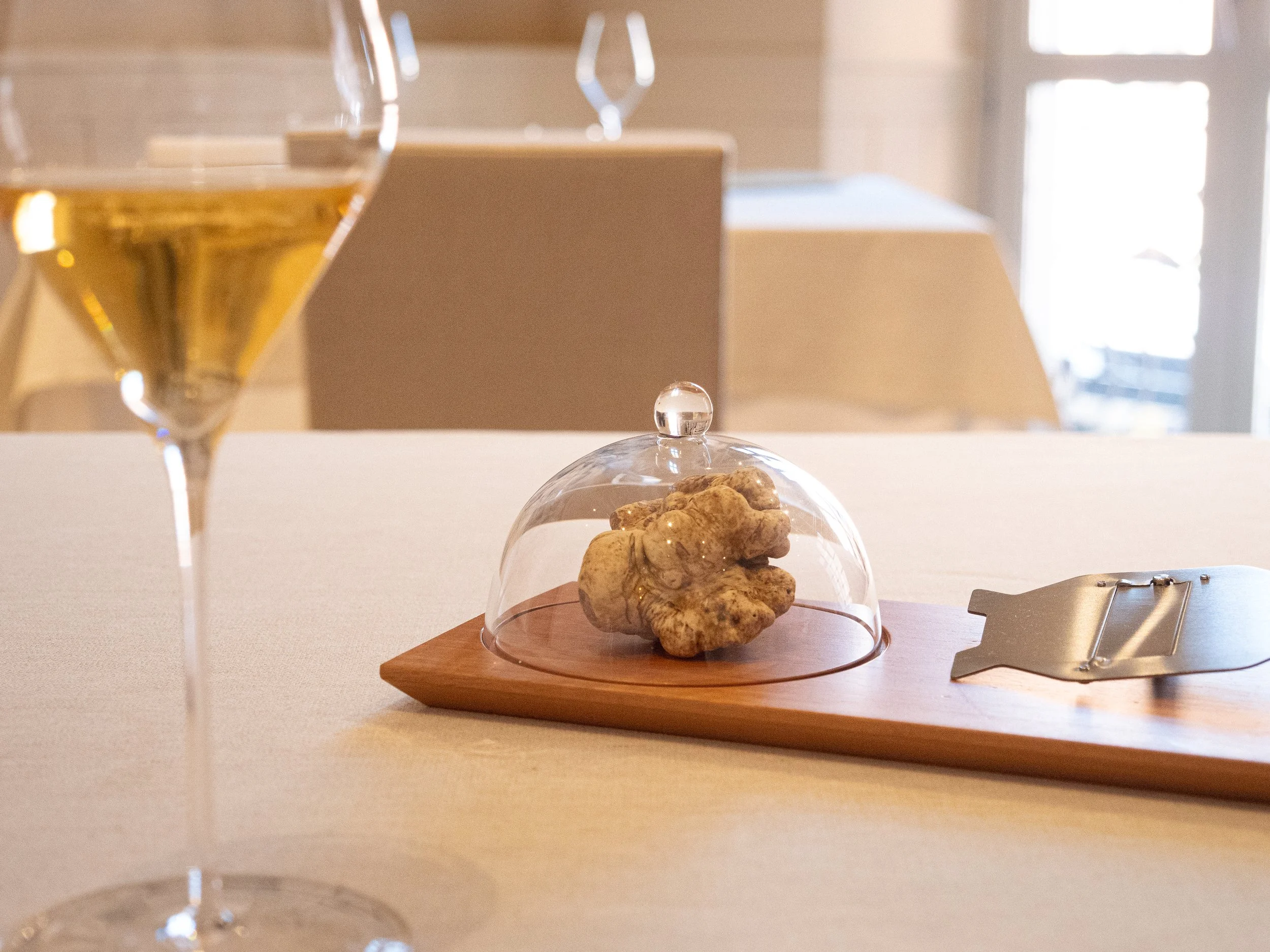
My white truffle; kept under a glass cover to retain its aroma
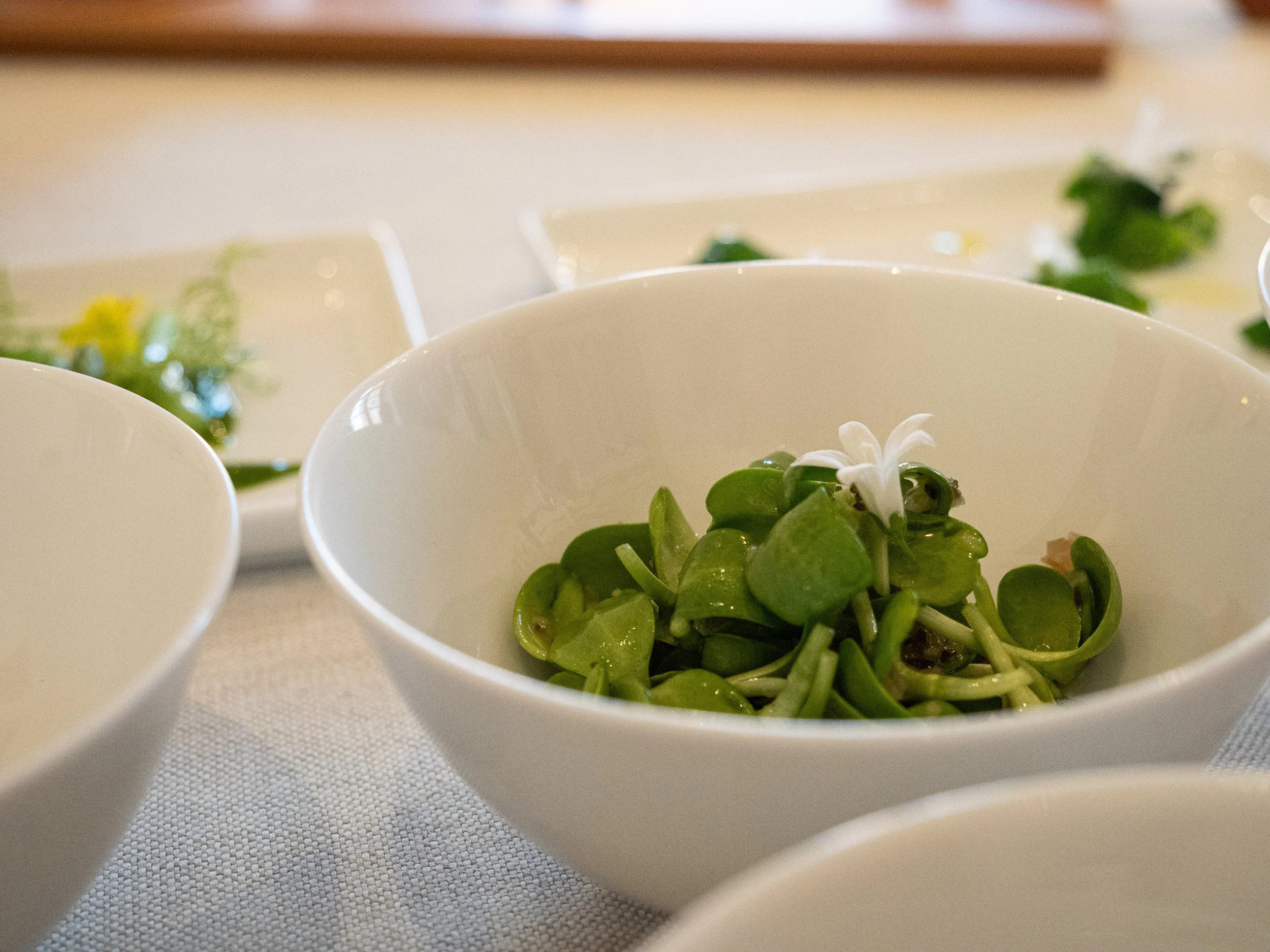
The experience began with a signature dish of Chef Enrico Crippa, The Welcome, a course of 11 amuse-bouches spanning from greens and root vegetables to a chicken slice with a touch of Japanese seasoning. The message was immediate and clear: an emphasis on the land, with vegetables and herbs sourced from the restaurant’s own garden.
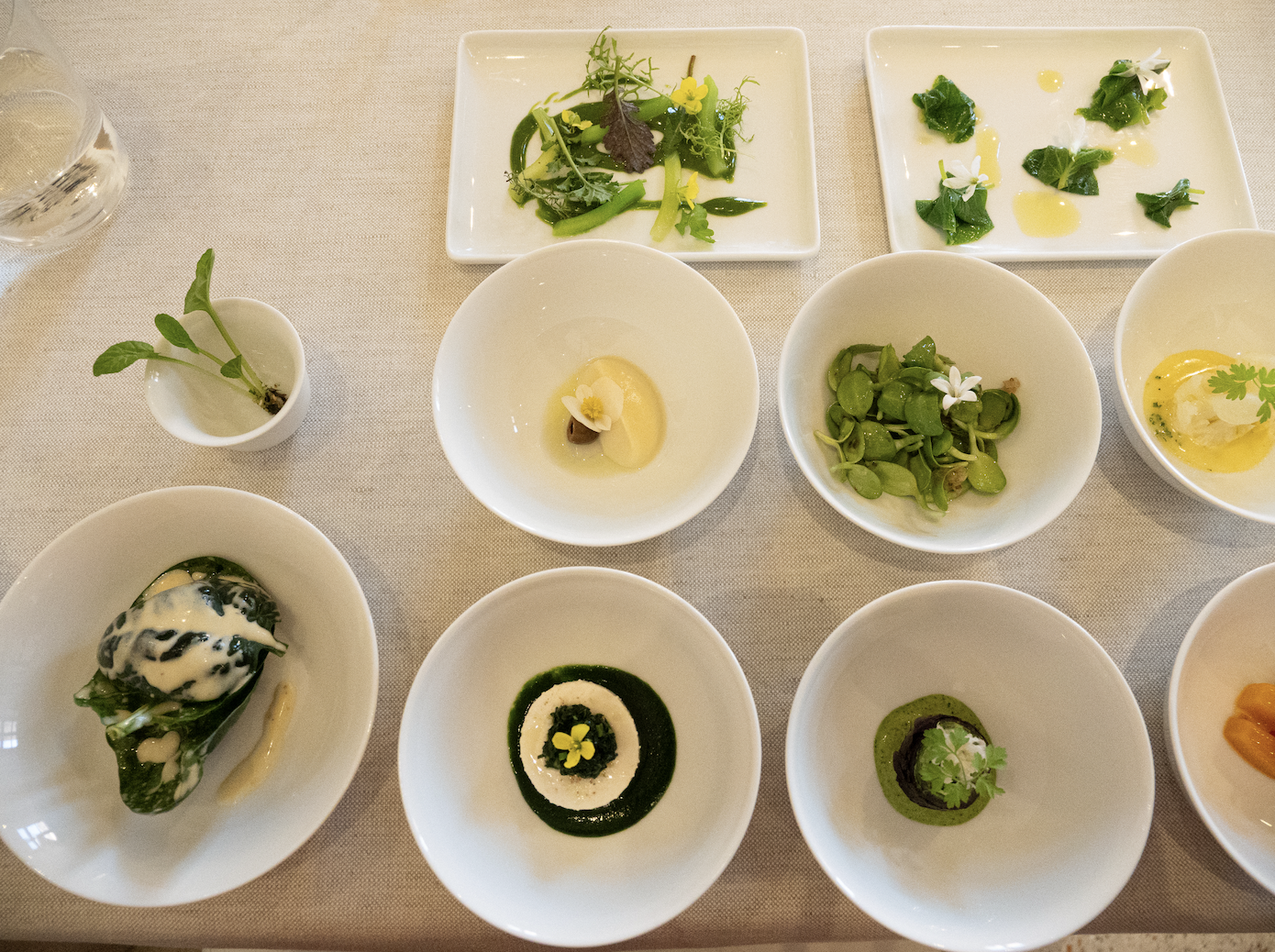
Part of The Welcome; there were too many plates that I could not capture everything at once
Among the 7 courses, two dishes stood out most: The Sea and The Soil.
The Sea astonishes you with restrained touch, demonstrating how white truffle can be elevated by simple ingredients and minimal intervention. Scallops are lightly seared in butter until just tender, then seasoned with a trace of white miso to enhance their umami. Cabbage sits on the side to soften the oiliness. Truffles are sliced right after serving, gently warmed by the scallops, spreading earthy aroma into the air in real time.
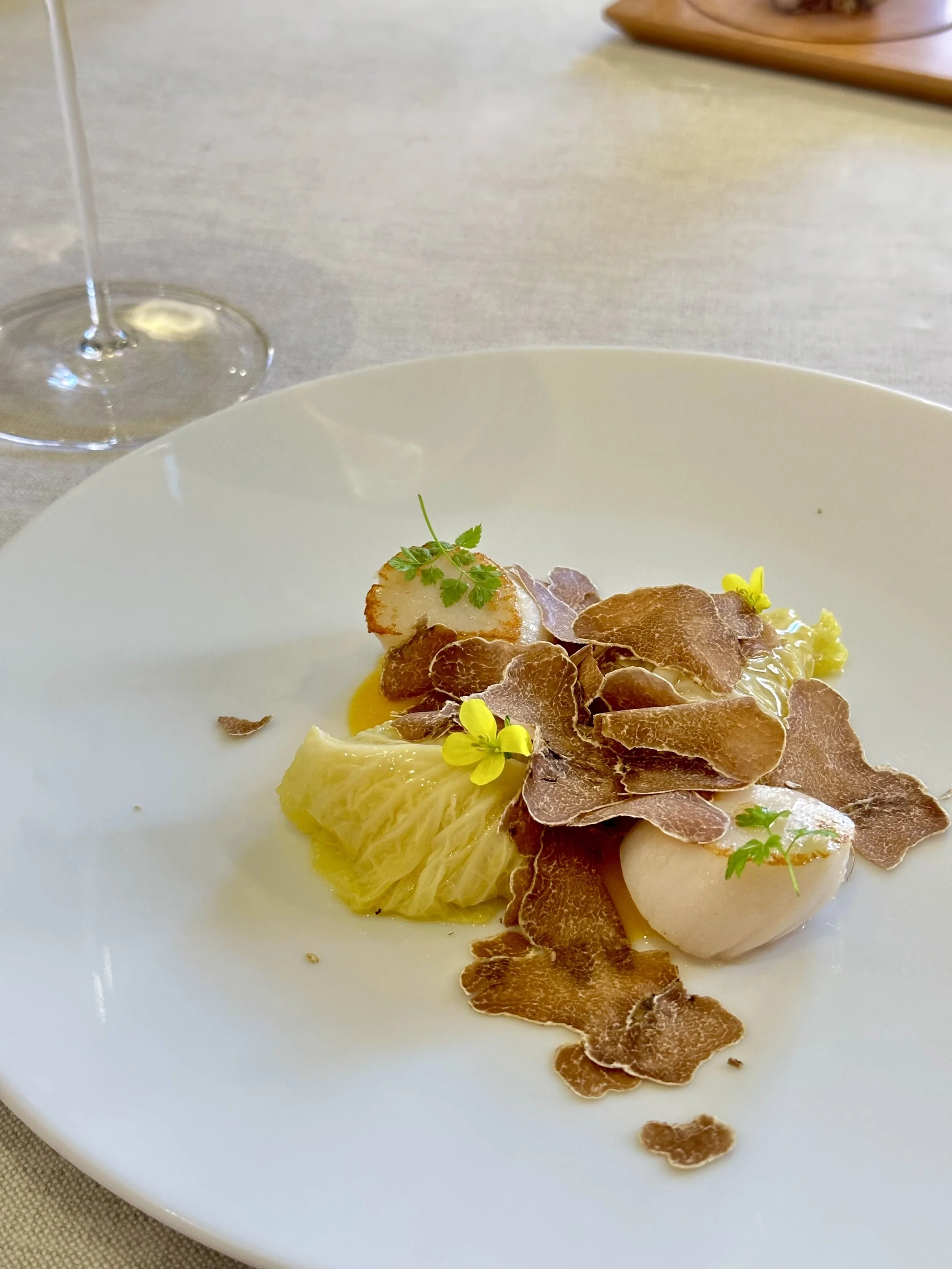
The Sea
If The Sea highlights the white truffle itself, The Soil is where the kitchen shines. Quail eggs marinated in Chinese black tea Zhengshan Xiaozhong are blended meticulously into a soft potato cream, finished with a final dusting of the tea powder, and, of course, generous shavings of white truffle. Zhengshan Xiaozhong, one of the first black teas in the world, originated from Fujian, China, and is known for its distinctive smoky aroma from its unique processing method. Paired together with a velvet base, the tea's smokiness does not overpower the truffle but extends the perfume.
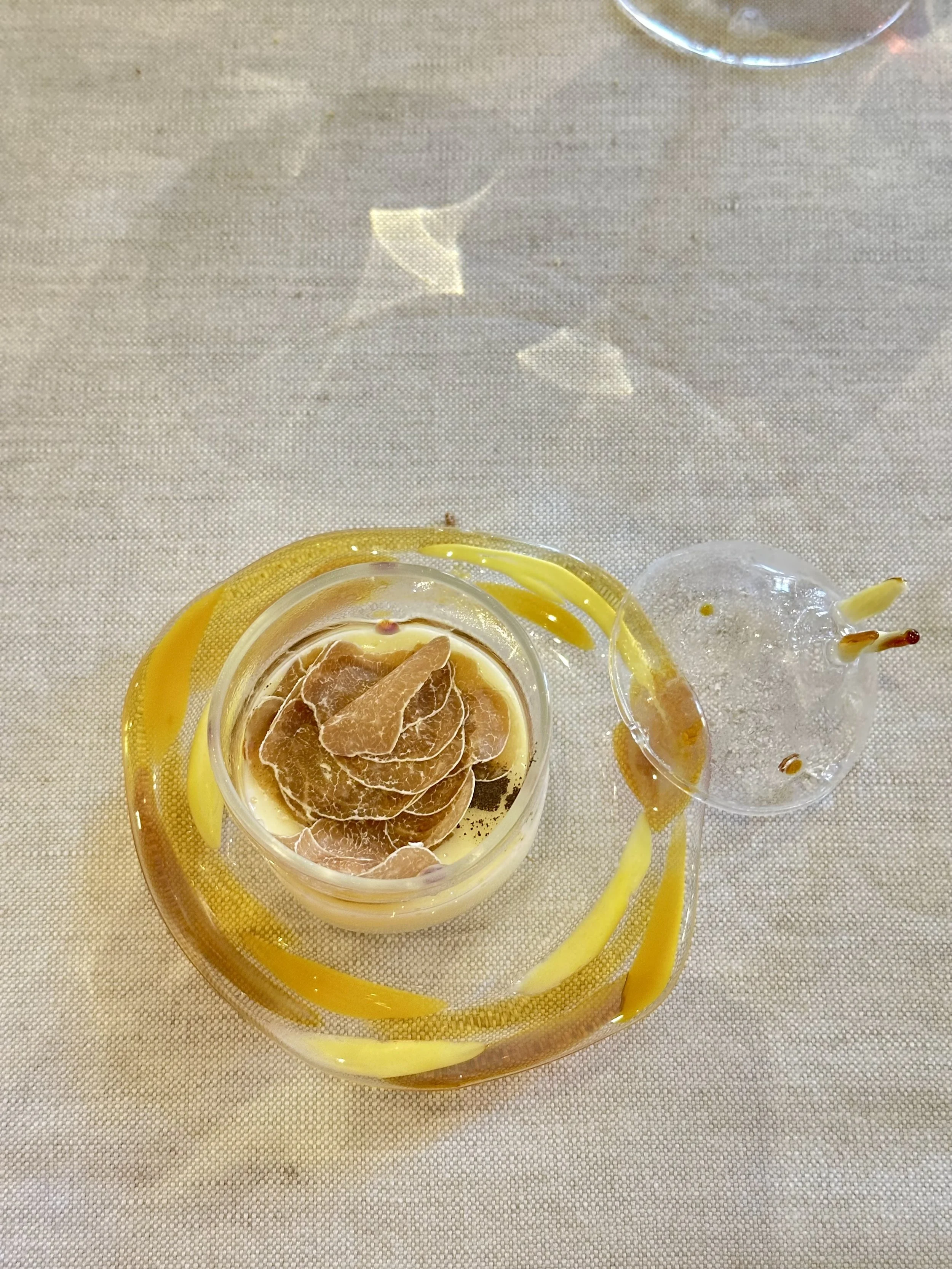
The Soil
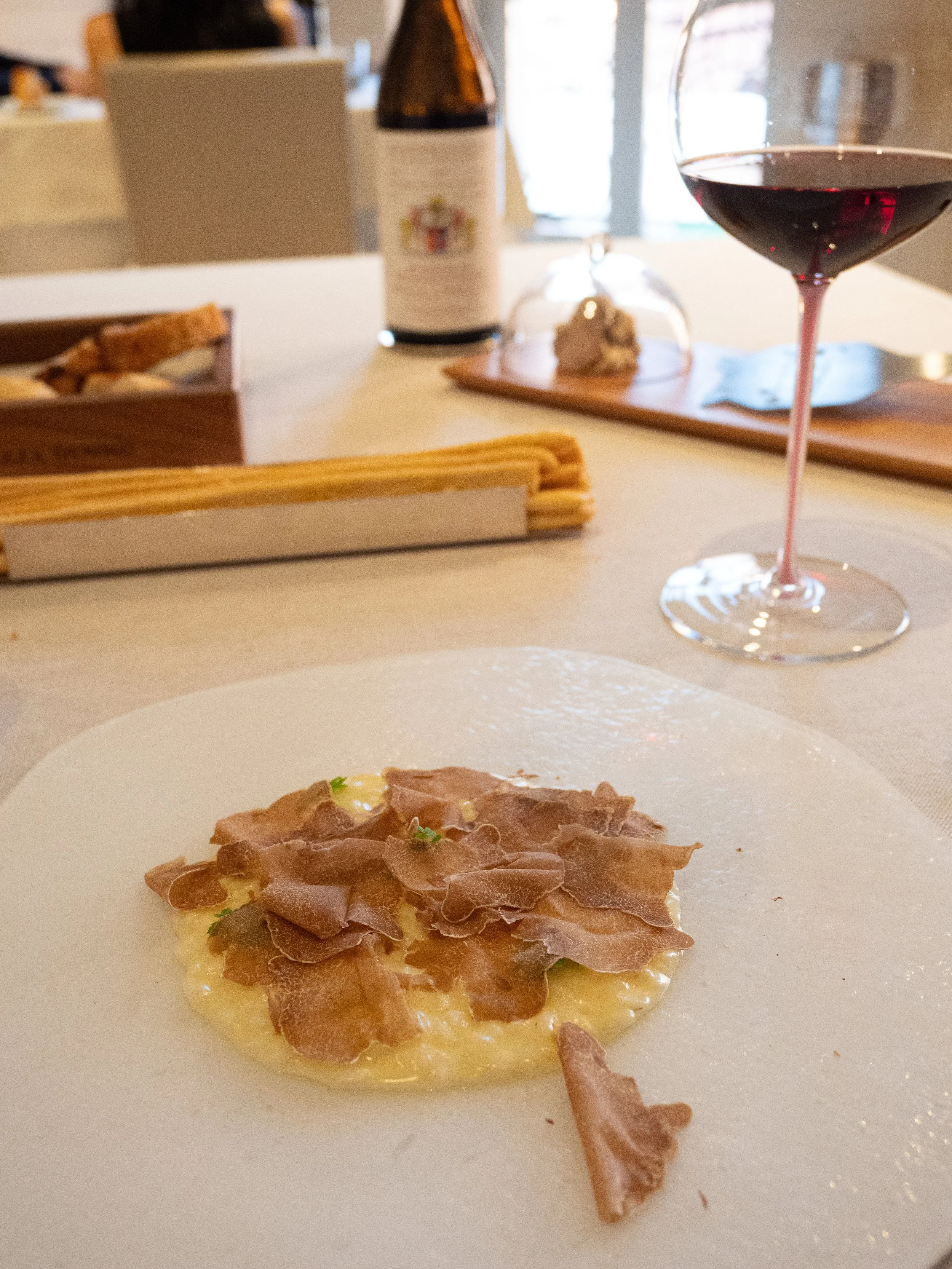
Risotto with white truffle
The wine list not only did not disappoint, but came as a genuine surprise. The restaurant is run by the Ceretto family, who have been producing wines in Piemonte for almost a century. The wine list offers an extensive selection of local wines, ranging from Barolo to Timorasso.
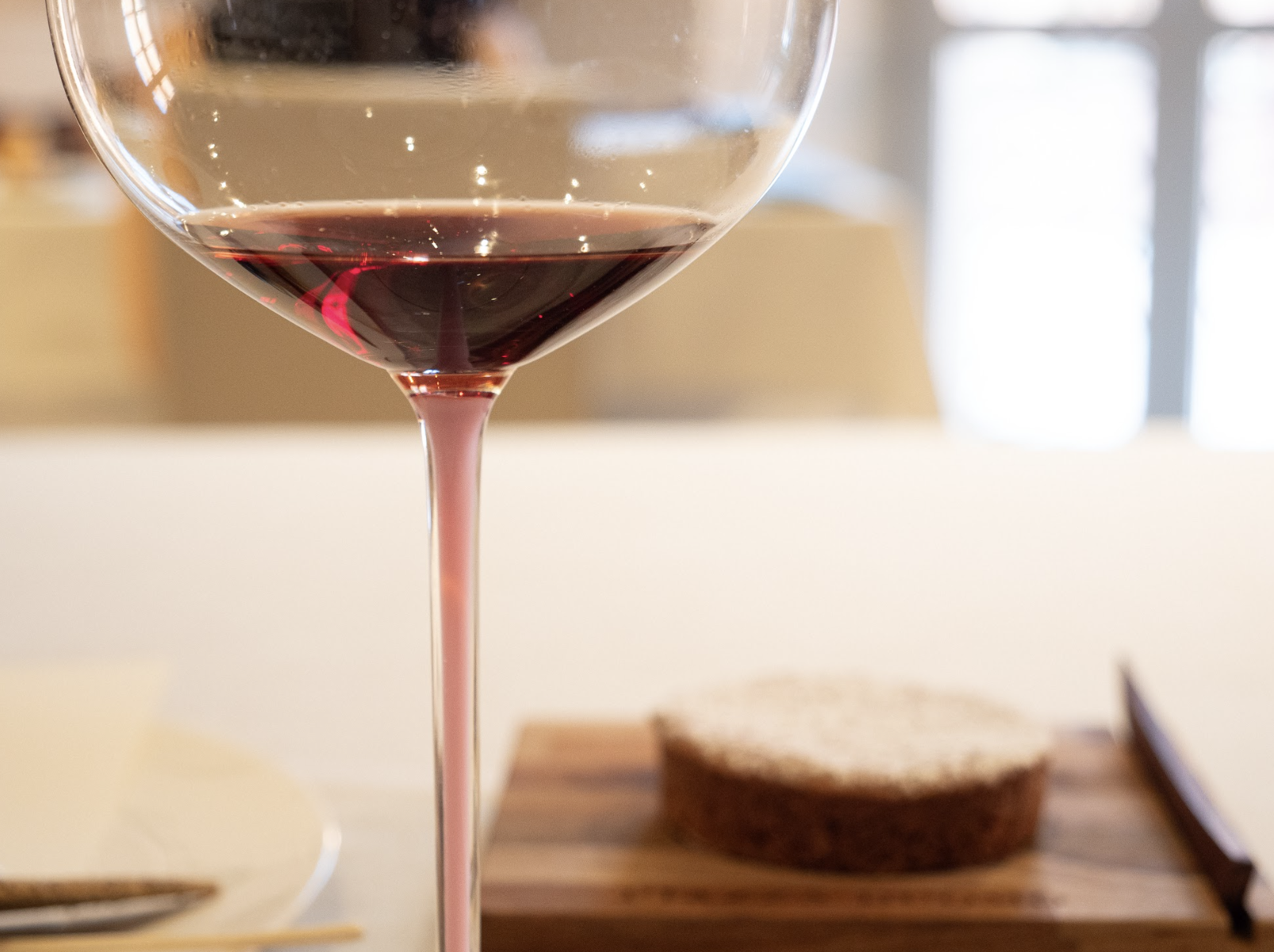
As a solo diner, I was particularly impressed by the by-the-glass selection, made possible through the use of Coravin. Too often, I struggle between committing to a good bottle and trying out different but mediocre glasses, since by-the-glass usually does not offer a promising selection. But at Piazza Duomo, I was able to find a 2012 Meursault by Coche-Dury and an off-menu 2004 Monprivato Barolo by Giuseppe Mascarello e Figlio at a remarkably reasonable price.
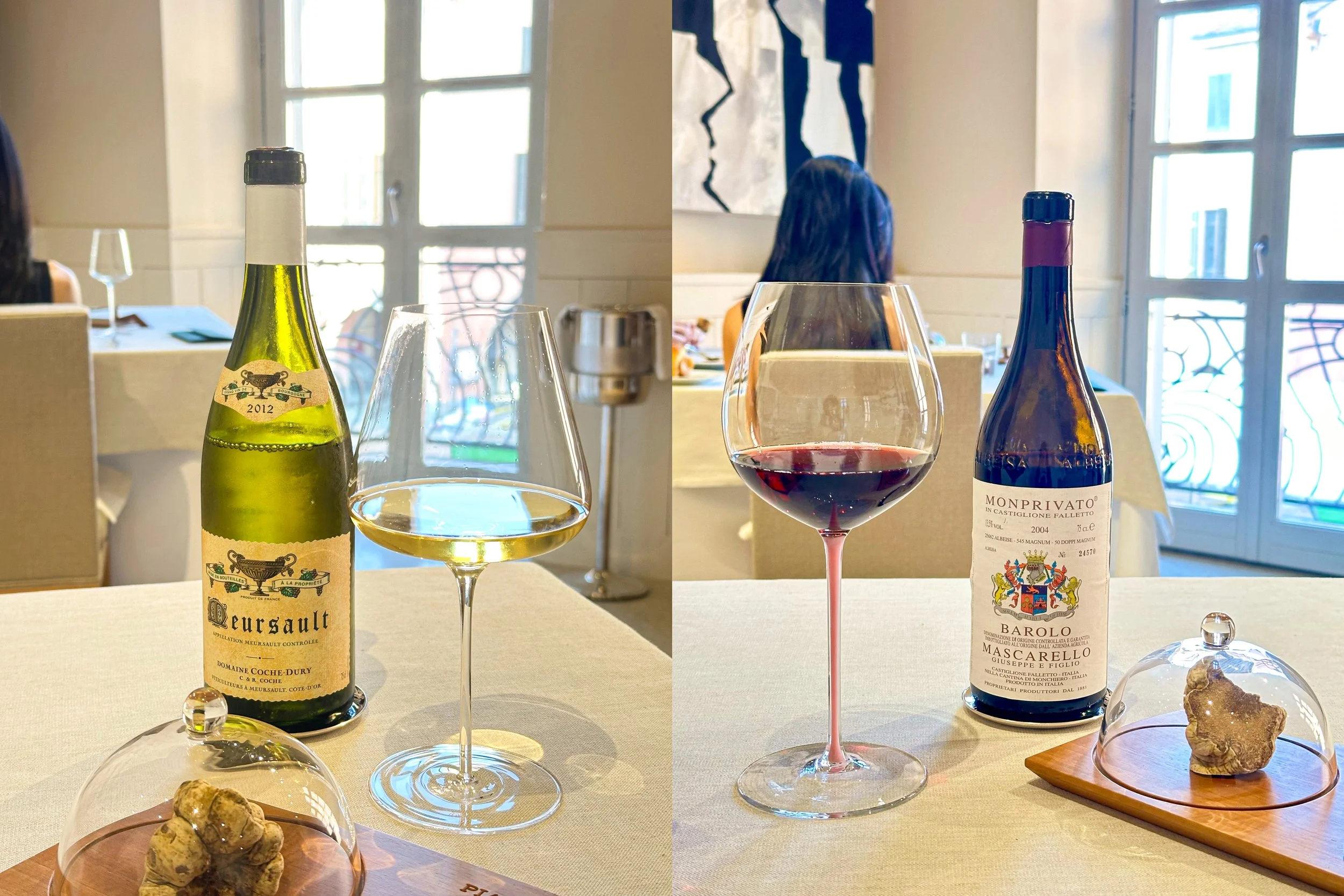
Both wines approached smokiness from entirely different directions. The unfiltered Coche-Dury Meursault extended the Burgundy terroir through extended lees contact, offering subtle toastiness, a powerful yet controlled body, and finely balanced acidity. The 2012 vintage was at its prime with lingering notes of brioche and smoke unfolding on the palate. In contrast, the Monprivato derived its smokiness from aged Nebbiolo (wine variety used to make Barolo) in oak, a deeper, more grounded note of forest and leather, perfectly anchoring in the earthiness of the truffle.
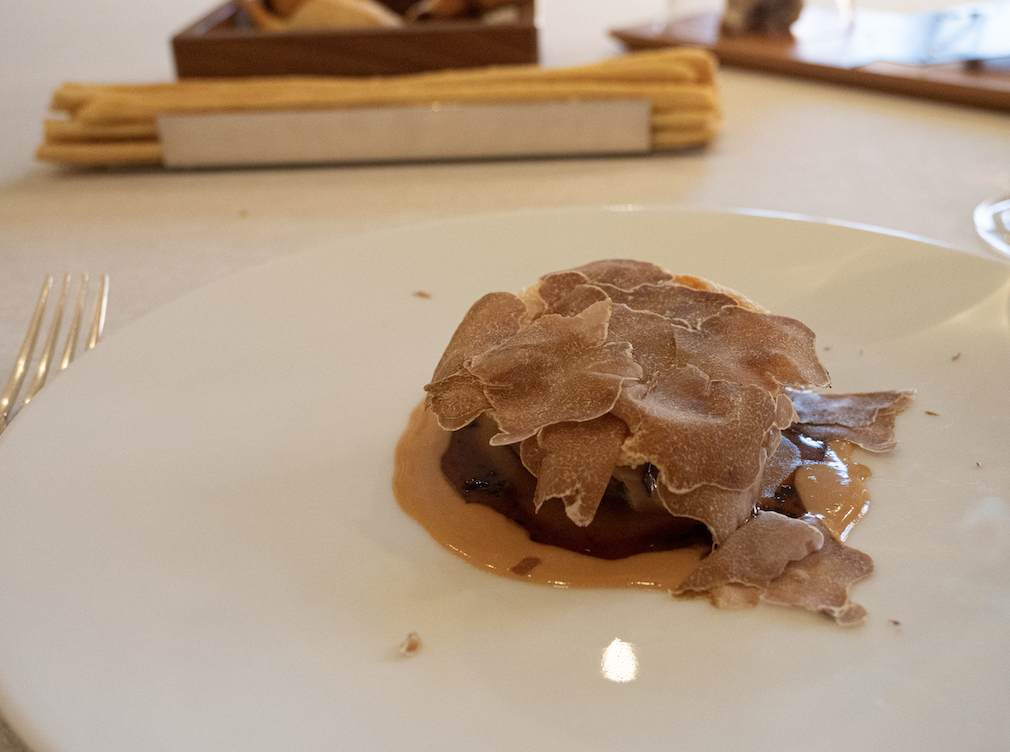
Reconstructed Beef-Wellington
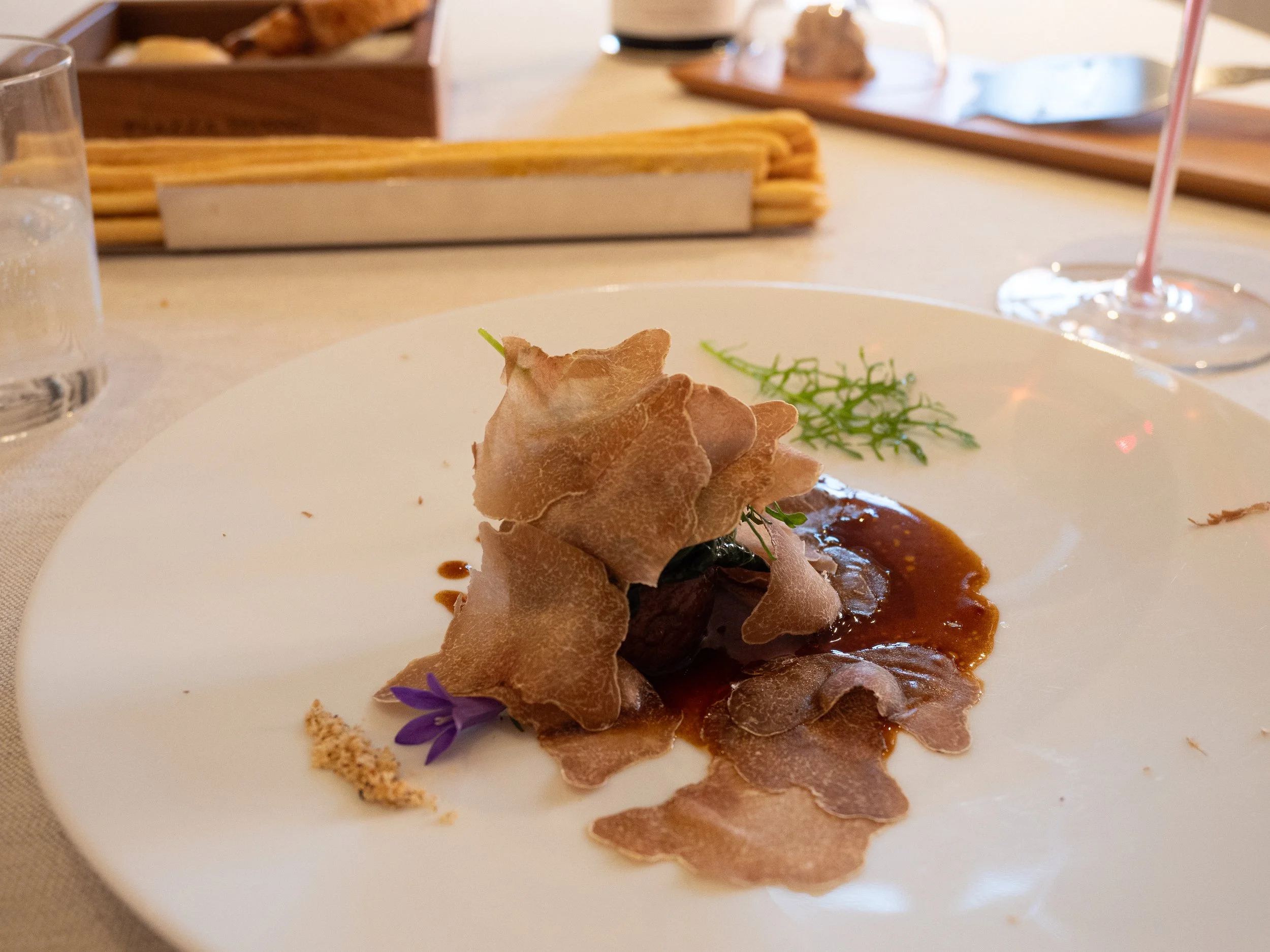
Venison with red wine sauce
But, is it really worth that much money, that much hype? At €14 per gram (price fluctuates daily, based on the supply), the white truffles in the restaurant’s recommended pairing of 30g per person quickly climb to nearly €500. In fact, the annual white truffle auction sold a one-kilogram white truffle for €110,000 to a buyer from Hong Kong. Staring at the bill, I found myself pondering its value once again.
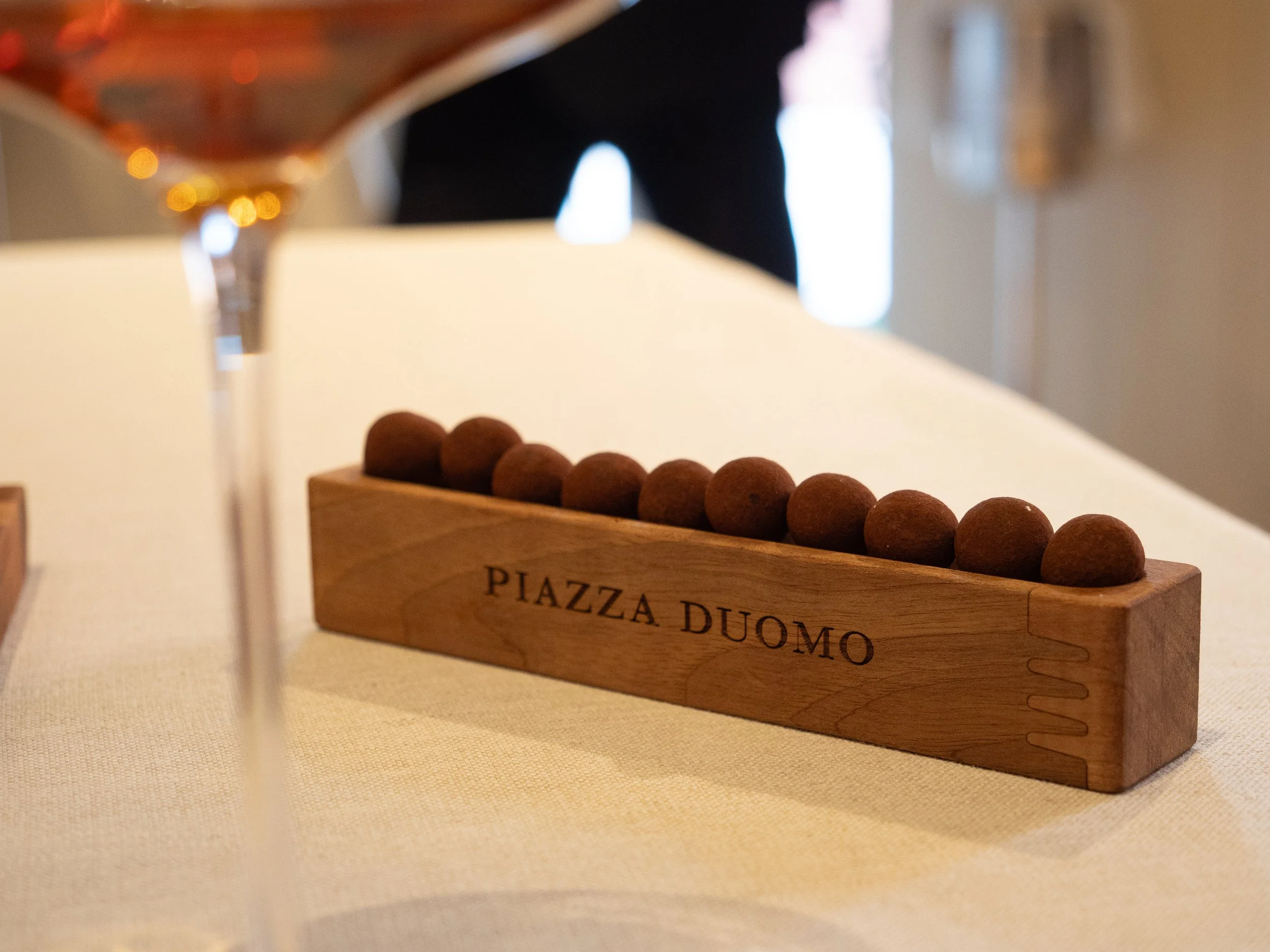
Perhaps the thought came from the fact that I cannot afford to treat the sum as nothing, but spending without thinking is only something I find even harder to accept (even afterward). Indeed, people pay much more for wine, designer bags, and other extravagantly priced experiences. Yet, for me, what lies behind the so-called luxuries is the stories that they convey. And that often leads me to stay away from the "hype"—when the scarcity becomes people's ego, stories to brag with colleagues, and pictures to post online (which I am shamelessly participating right now. I mean, I already paid!!).
The classic trio—truffle, caviar, foie gras—has always unsettled me for such reason. Not because of their taste, and they are undeniably delicious, but because of the ideas attached to them. Too often, they function less as a part of genuinely appreciated cuisine but more as a form of consumption for social status. I want to be clear: I respect people who use such symbols strategically, and I don’t confuse those motives with the food itself. Still, that symbolic layer leaves me anxious.
So, what's the story lying behind the white truffle?
I first expected a similar, traditional, if not wholesome, story like the narratives of many winemakers or restaurants. Instead, I encountered something far more troubling. The deeper I looked, the more I saw how money distorts the entire chain of hunting, selling, and consuming. Rival hunters poisoned forests to kill competitors’ dogs (they use dogs for truffle hunting now, not pigs anymore). Sellers defaming one another. A product that forms the backbone of a local economy, yet turns everyone against each other because of its natural scarcity.
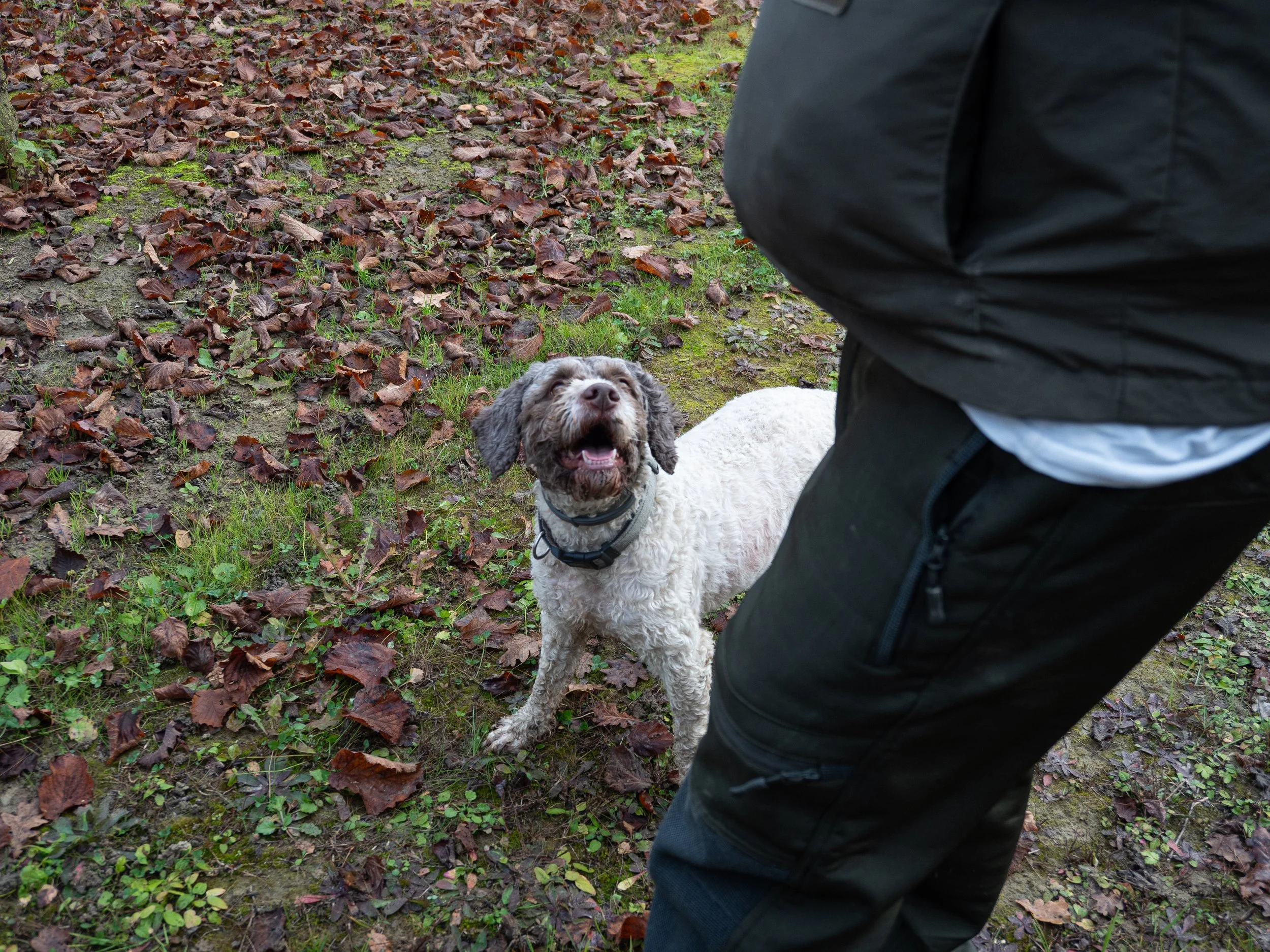
the truffle hunting dog on my hunting tour
Of course, there are also moments of genuine beauty, such as that shared silence when the aroma first blooms at the table. And surely there are stories of exploitation and ugliness behind many other luxury products as well. But I keep returning to one belief: true value ultimately comes from people.
In Burgundy, it is the human ability to understand terroir and adjust every step of winemaking to reveal the best of the grapes. In fashion houses like Dior, it is the embedded vision—the spirit of the “New Look” reinterpreted across eras through craftsmanship and savoir-faire. This is what has drawn me in so strongly: people are endlessly complex, inventive, and contradictory.
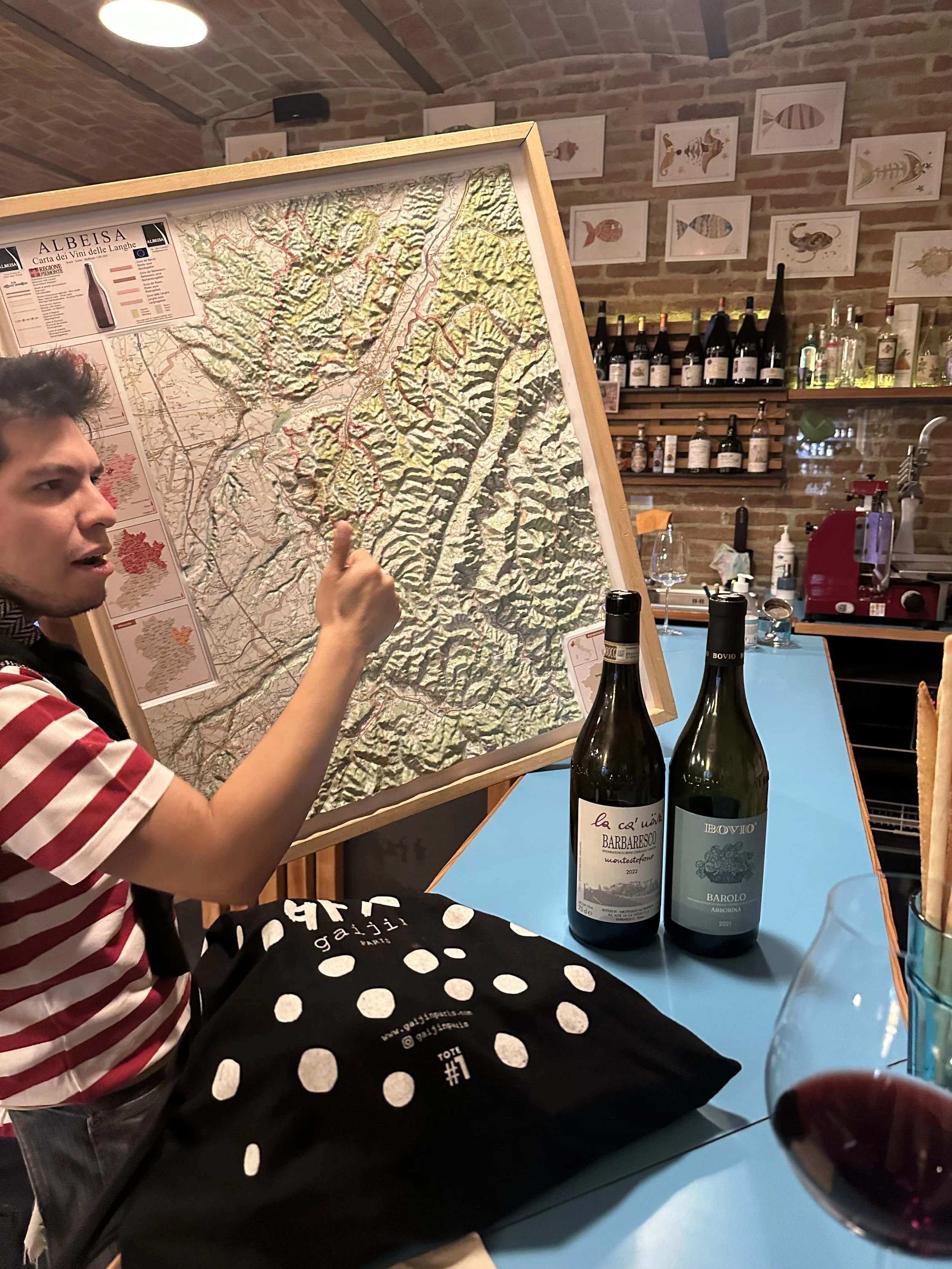
A sommelier in a wine bar at Barolo (Enoteca La Vite Turchese) showing us where the plots of our Barberesco and Barolo are located
With white truffle, however, I struggle to find that human meaning. Beyond the fleeting enchantment, it feels less like a story of craft than an edible form of gold.
Of course, if one has the financial freedom to buy white truffles as casually as I buy Haribo, the experience might register differently. For me, Piazza Duomo Alba’s greatest value lay not in its plates but in the reflection it provoked. And, admittedly, the wines were extraordinary.
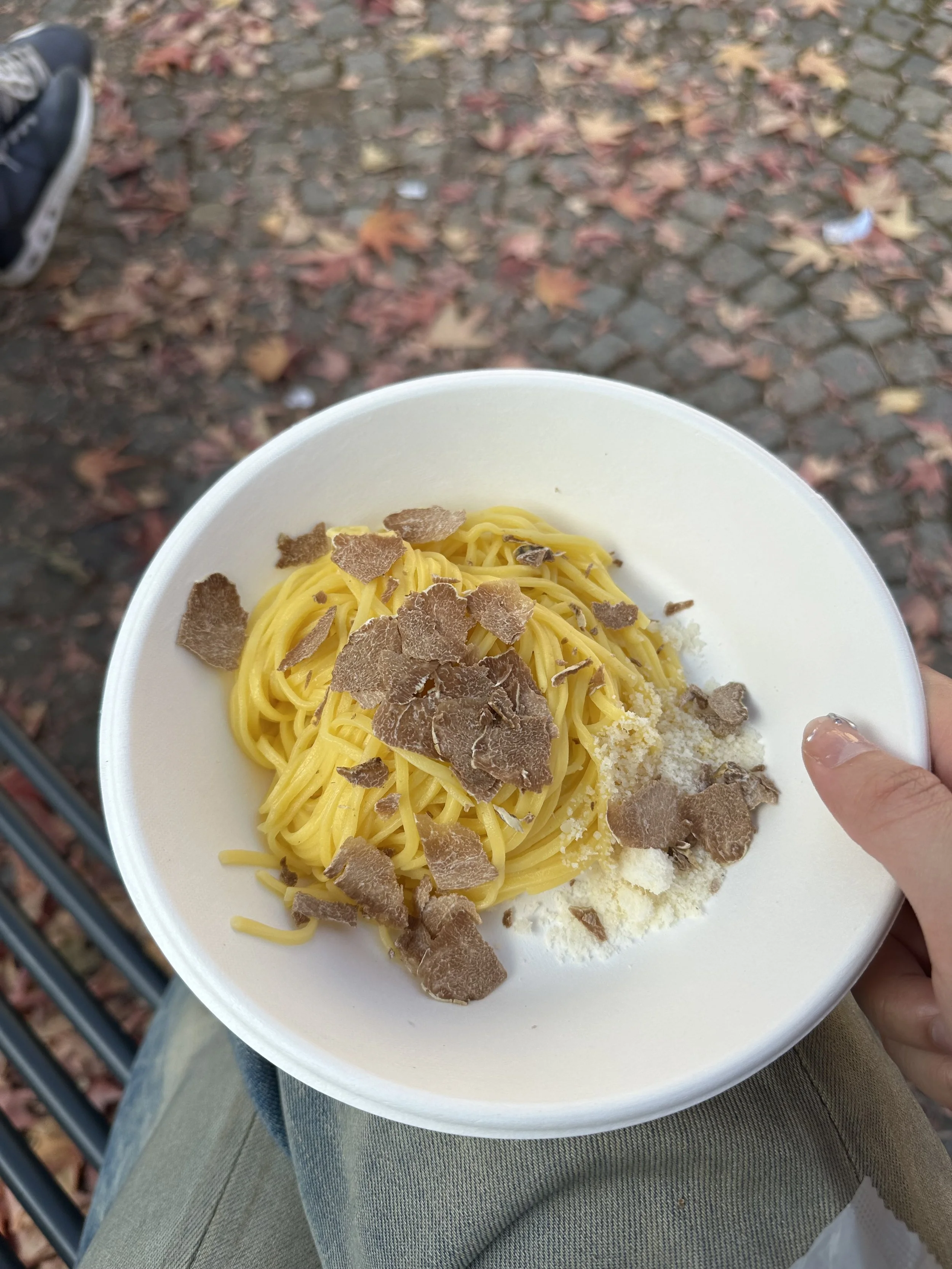
Enjoying my remaining truffle over tagliolini in the park
For more culinary journeys — from haute cuisine to street food, from wine notes to dessert stories — follow @tree_bakes__ on Instagram.